


What are the 3 stages of money laundering?

Updated: 16 hours ago
Money laundering is a global challenge that fuels organised crime, corruption, tax evasion, and terrorism. The United Nations Office on Drugs and Crime (UNODC) estimates that less than 1% of illicit financial flows are detected or confiscated, illustrating the scale and sophistication of today’s laundering networks.
Understanding the 3 stages of laundering is essential not only for banks and fintech firms, but also for insurers, crypto platforms, professional service providers, and anyone subject to anti-money laundering (AML) regulation.
Today, our team will answer "What are the 3 stages of money laundering?". We'll give an overview of the common methods used in each stage, the different risks, and how to prevent money laundering.

What are the 3 stages of money laundering?
Money laundering typically progresses through three phases:
Placement: introducing illicit funds into the financial system
Layering: obscuring the origin through multiple movements and transactions
Integration: reintroducing the funds as seemingly legitimate wealth
Each stage requires a different compliance lens.
TIP: Read our guide "Money Laundering: Meaning, methods and prevention."
Stage 1: Placement
Placement is the stage where illicit funds enter the system.
It's the riskiest phase for criminals because it requires converting physical cash or illicit proceeds into a format that enters the regulated financial system. This is where detection is most likely.
Common placement tactics include:
Depositing cash into bank accounts or money service businesses;
Using cash-intensive businesses such as restaurants, nightclubs, or casinos;
Purchasing high-value goods such as vehicles, jewellery, or precious metals;
Structuring large sums into smaller deposits to evade threshold reporting (“smurfing”);
Using money mules, a common money laundering scheme, or complicit third parties;
Trade-based laundering (over-/under-invoicing, phantom shipments).
Trade-based money laundering (TBML) is recognised by FATF as one of the most complex and significant laundering channels globally.
While not quantified at “80 percent”, FATF warns that TBML is widely used due to its ability to disguise illicit funds within legitimate international trade.
Related content: What are money mulling networks and scams?
Red flags at the placement
Financial institutions should watch for:
Structuring deposits just below reporting thresholds;
Customers with no clear source of funds or suspicious cash activity;
High-volume cash deposits inconsistent with business profile;
Businesses with unclear ownership or no legitimate operational footprint;
Unusual use of DNFBPs (lawyers, real estate agents, dealers in precious metals).
Strong CDD, beneficial ownership verification, and transaction monitoring are essential at this stage.

Stage 2: Layering
Layering is the most sophisticated stage involving a series of transactions designed to break the audit trail and distance funds from their criminal source.
This phase often includes cross-border transfers and complex structuring.
Layering techniques include:
Rapid electronic transfers between multiple accounts and jurisdictions
Use of shell companies, offshore entities, or trusts;
Professional money laundering networks (PMLNs);
Purchasing and selling financial instruments, commodities, or artwork
Cryptoasset layering through mixers, tumblers, or cross-chain bridges;
Trade misinvoicing and false documentation;
Converting cash to digital assets and vice versa;
Use of nominee directors or straw men.
Our expertise and experience show us that digital banking, instant payments, and crypto have significantly accelerated layering velocity.
Funds can move through dozens of accounts in minutes, making detection challenging.
Secure & Scalable Crypto AML Software
Address the distinct compliance needs of digital assets with AI-powered tools designed to simplify regulatory challenges and prevent money laundering in blockchain technology.
Why layering is hard to detect
FATF and EU AMLD6 highlight that layering often exploits:
Weak beneficial ownership registers
Jurisdictions with limited AML supervision
Gatekeepers such as lawyers, accountants, and corporate service providers
Fragmented monitoring systems within financial institutions
Machine learning, behavioural analytics, and network graphing can help identify hidden relationships, but human oversight remains critical.
Read also: The best AML software for law firms
Stage 3: Integration
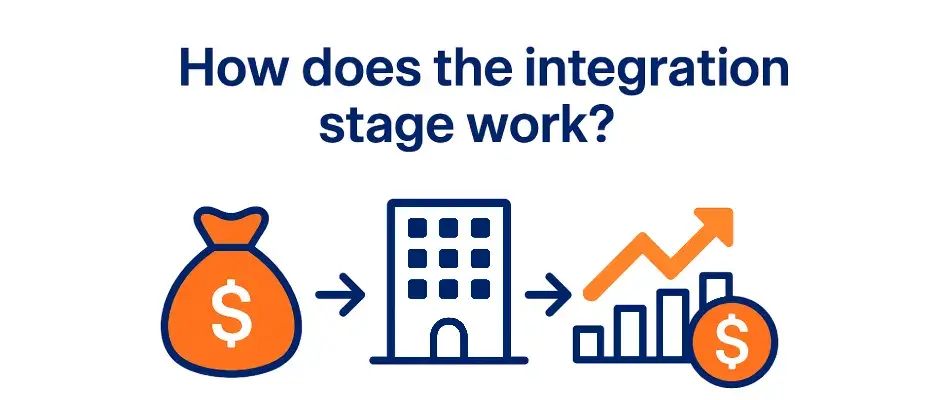
Integration in money laundering is the point at which laundered money re-enters the legitimate economy.
At this stage, funds appear to originate from lawful activity, making detection extremely challenging.
Common integration channels include:
Purchasing real estate, commercial property, or luxury assets;
Investing in legitimate businesses or start-ups;
Using front companies with real operational turnover;
Creating intra-group loans or financing arrangements;
Mixing illicit funds with legitimate business revenue;
Participating in financial markets or private equity;
Funding charitable or community organisations to mask origins.
Integration often looks indistinguishable from genuine economic activity, which is why ongoing monitoring (FATF Recommendation 10) and enhanced due diligence for high-risk relationships are essential.

Compliance Software for Real Estate
Manage property transactions, legal documents, and stakeholder verifications from a single, intuitive platform that prevents money laundering.
How companies detect and prevent money laundering
The role of financial institutions and legal and regulatory frameworks
Financial institutions, fintech firms, crypto platforms, insurers, and DNFBPs serve as the first line of defence.
AML compliance programmes must meet regulatory expectations under frameworks such as:
FATF Recommendations
US Bank Secrecy Act & USA PATRIOT Act
EU AMLD6 & upcoming EU AML Authority (AMLA)
CBUAE AML Rulebook (2023)
SAMA AML/CFT Regulations
UK Money Laundering Regulations (MLR 2017 + amendments)
A compliant AML programme typically includes:
Governance and oversight: Board responsibility and MLRO accountability;
Risk assessment: Enterprise-wide and customer-level;
CDD/EDD: Verification of identity, beneficial ownership, and source of funds.
Ongoing monitoring: Risk-based transaction monitoring and sanctions screening;
Suspicious Activity Reporting (SAR/STR): To the FIU.
Training: Regular staff AML training;
Independent audit: Testing effectiveness of controls;
Record-keeping: Retention for 5–10 years, depending on jurisdiction.
Institutions that treat AML as a strategic function, not a box-ticking exercise, are significantly more resilient to financial crime.
Read also: The best sanctions screening software

How technology strengthens AML
AML has shifted from manual reviews to intelligence-driven systems.
Regulators increasingly expect institutions to adopt technology that improves accuracy and reduces risk.
Modern AML tools support:
AI and pattern recognition: Identifies unusual patterns not detectable by rules-based systems.
Machine learning for anomaly detection: Learns from historical cases and flags emerging typologies.
Advanced sanctions and PEP screening: Uses fuzzy matching, NLP and phonetic algorithms to reduce false positives.
Blockchain analytics: Tracks crypto transactions, identifies mixing patterns and risk scores wallets.
Entity resolution and identity graphing: Links customer records, devices, geolocation, and behaviour to reveal interconnected risks.
Perpetual KYC: Continuously updates customer risk profiles instead of relying on periodic reviews.
Why azakaw is the perfect choice for your business
At azakaw is an end-to-end solution that prevents money laundering and financial crimes.
It's one of the most comprehensive AI-driven platforms, and it integrates:
onboarding checks
transaction monitoring
sanctions screening
adverse media screening
real-time risk scoring
real-time ID verification
customised non-coded onboarding workflows
It results in a unified compliance ecosystem designed by practitioners who have worked inside banks, regulators, and financial intelligence units.
Technology is essential, but it does not replace human judgment. The best AML outcomes combine automation with experienced compliance professionals.
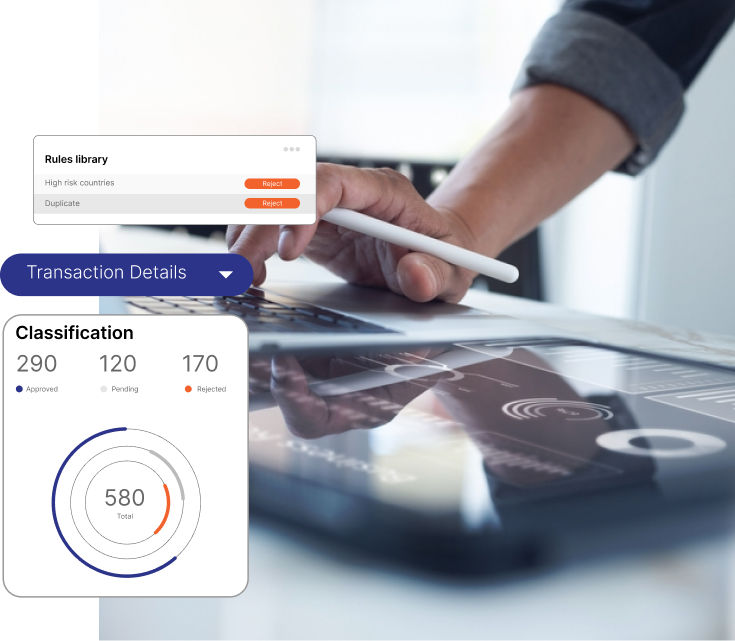
The End-to-End Platform
Streamline compliance from identity and business verification to corporate compliance and AML transaction monitoring, reducing costs and complexity so you can scale with confidence.
FAQs
What is placement vs layering vs integration?
Placement is injecting illegal money into the financial system, layering is the process of moving illegal funds through multiple transactions in order to conceal their source, and integration is the process of returning the money to the criminal in a way that appears to be legitimate.
Conclusion
To combat illegal financial activities effectively, organisations must understand the three stages of money laundering and apply a risk-based approach across each one.
Strong customer onboarding, continuous monitoring, accurate AML data, trained staff, and modern technology form the foundation of an effective AML programme.
Across our work with banks, fintechs, crypto providers, and high-risk industries, we have seen that the strongest defences come from vigilance, innovation, and collaboration.
By aligning with global AML standards, investing in smart technology, and protecting the integrity of financial systems, institutions can reduce financial crime and build lasting trust.
Related articles


