


Proof of address in Saudi Arabia: accepted documents, rules, and guidelines

Updated: Jul 11
Proof-of-address verification in Saudi Arabia is often more complex than it appears. Banks, fintech companies, and regulated businesses regularly face onboarding delays.
At the same time, Saudi Arabia’s digital infrastructure, including SPL National Address, Absher, and Ejar, provides organizations with reliable ways to verify customer addresses through government-linked systems.
This guide explains which proof-of-address documents are accepted in Saudi Arabia, which ones are commonly rejected during compliance checks, and how businesses can streamline address verification processes for KYC and AML onboarding.
Proof of Address (POA) in Saudi Arabia: Key Takeaways |
|
|
|
|
|
|

What is Proof of Address in Saudi Arabia?
Proof of address is an official document that confirms a person’s or company’s current residential or business address.
In Saudi Arabia, proof of address is commonly required for banking, KYC verification, residency procedures, utility registration, telecom services, and government transactions.
Banks, government authorities, and regulated businesses use proof of address to confirm identity and reduce fraud risks.
Why is Proof of Address important in Saudi Arabia?
Proof of address is important because Saudi banks, fintech companies, telecom providers, and government departments must comply with KYC (Know Your Customer) and AML (Anti-Money Laundering) regulations.
Accurate address verification helps prevent:
Fraudulent account creation
Identity theft
Money laundering
False residency claims
How it connects to KYC and AML compliance in Saudi Arabia
As per SAMA's Anti-Money Laundering (AML) framework and the Financial Action Task Force (FATF) recommendations, banks, financial institutions, and payment systems serving financial transactions need to identify clients' names and addresses as part of their ongoing effort to carry out Customer Due Diligence (CDD).
Having up-to-date and accurate information helps curb instances of anonymous or fictitious accounts being created to launder money.

End-to-End AML Compliance Tool
azakaw streamlines compliance from identity and POA verification to corporate compliance and AML transaction monitoring, reducing costs and complexity so you can scale with confidence.

When do you need proof of address in Saudi Arabia?
You may need proof of address more often than expected. Most banks, telecom providers, landlords, and government systems require current address verification.
Opening a bank account
All banks that follow SAMA regulations require proof of address to open a bank account or update customer details, for both Saudi nationals and expatriates.
If your registered address as recorded by the bank does not match your current place of residence, you will need to provide current proof of address to update your details.
Read also: Anti-Money Laundering compliance for banks
Apply for residence, iqama, or visa renewal
Iqama, the official residence permit for foreigners living in Saudi Arabia, requires a registered residential address.
Providing a valid address is also necessary to update or change the status of a residence permit through the Ministry of Interior.
The employers providing sponsorship to their expatriate staff have to ensure that all information related to the address is correct and up-to-date in the Absher system.
Utility and telecom registration
You can register for electricity with the Saudi Electricity Company (SEC), for water with the National Water Company (NWC), or for telecommunications services from service providers such as STC, Mobily, or Zain.
Having a confirmed address is necessary to complete these registrations, resulting in documents such as bills or connection notes, providing evidence of your address that can be used for multiple purposes.

Reduce Fraud Risk with azakaw
Automate and accelerate the onboarding process, minimising manual intervention and reducing errors. Create customised onboarding flows and verify individual customers or legal entities with ease.
Company compliance and business setup
Any companies looking to set up in various government agencies, open corporate bank accounts, or complete any kind of KYC as part of their commercial activities require proof of address for their company, as well as sometimes for the ultimate beneficial owners (UBOs).
Saudi Banks and regulated businesses' compliance departments deal with this task regularly.

What documents can be used as proof of address in Saudi Arabia?
Saudi banks, government authorities, fintech companies, and compliance teams must accept proof-of-address documents issued by trusted or government-recognised sources.
The most commonly accepted documents include the SPL National Address Certificate, recent utility bills, bank statements, Ejar tenancy contracts, and official government correspondence.
National Address Certificate (Saudi Post / SPL)
The Saudi National Address system, managed by the Saudi Post (SPL), provides authentic address information in the country.
Upon providing your address via the SPL website or app, you can obtain a National Address Certificate featuring your name, address details, and a unique address number.
Various banks, government bodies, and Compliance teams use National Address Certificates as good proof of addresses.
Latest utility bill
Electricity or water bills issued by the Saudi Electricity Company (SEC) or the National Water Company (NWC) can serve as proof of address.
When provided, they contain the name of the account holder, details of the address where the service is being received, and are issued within the last three months.
Bills older than 3 months will be consistently rejected. If the service address is in the name of the landowner (not the resident), most institutions require additional supporting documents.
Bank statement or a letter
A valid bank statement or a letter issued by the bank containing the account holder's complete name along with the registered address, issued within the last 3 months, can serve as address proof with the majority of the establishments.
It should be issued by a bank regulated by SAMA and bearing the bank branch's seal/stamp or written on the bank's letterhead. Scans of online banking mobile applications cannot be accepted.
Ejar-Registered Tenancy Contract
The Ejar platform (Saudi Arabia's official Tenancy Registration System) issues Tenancy Contracts with details about the Tenant and the Property Address.
A Tenancy Contract issued through Ejar serves as strong proof of address since it is government-verified. It is recommended not to submit unregistered Tenancy Contracts, even if they appear to be authentic. They may lead to issues during Compliance Checks.
Government or Absher documents
Address verification documents issued by government departments, such as those sent by the Ministry of Interior, SAMA, Municipalities, etc., containing the receiver's name and complete address, could be considered as Valid Proof of Address.
Absher, the Saudi Government's digital service portal, provides the facility to download certain address-related documents used by various institutions for the purpose of KYC.
What information must a Proof-of-Address document include?
No matter which of the above-mentioned documents is submitted, it must contain all 4 key details to be accepted:
Your complete legal name (matching your ID Card).
Complete residence or business address
An issue or issue date within the last 3 months
An official seal or verifiable Digital Signature.
Proof of Address requirements summary
Document | Accepted by banks? | Max age | Key condition |
National Address cert (SPL) | Yes | No fixed limit — keep current | Must be registered in the system |
SEC / NWC utility bill | Yes | 3 months | Must be in the applicant's name |
Bank statement/letter | Yes | 3 months | SAMA-regulated bank only |
Ejar tenancy contract | Yes | Must be current/active | Must be Ejar-registered |
Absher / MOI correspondence | Varies by institution | 3 months | Must show full address |
Unregistered tenancy contract | Generally no | N/A | Rejected without Ejar registration |

How to get a proof of address in Saudi Arabia
There are several ways to obtain proof of address through SPL, utility providers, banks, Ejar, or employer-issued housing certificates.
Below, we provide a detailed step-by-step guide to obtaining the proof of address in Saudi Arabia.
Register your address with Saudi Post ( SPL)
To register your National Address:
Visit the Saudi Post website (spl.com.sa) or download the SPL app
Log in using your National ID number or Iqama number
Enter your residential details
Complete the registration process
Download the certificate
It's easy and can be completed within 10 minutes if your details are available in the Saudi government databases.
Download or print your National Address certificate
After registering, visit the SPL website again, find your address details section, and choose to download your certificate.
Your PDF certificate will contain details such as your name, Address Code, and Full Address written in both Arabic and English.
Digital copies of this certificate are acceptable to most compliance and government offices; however, some may ask for a printed copy with the address code showing clearly.
Obtain the latest Utility/Telecom bills from official companies
Access your account management portals for SEC, NWC, STC, Mobily, or Zain, depending on your registered services. Obtain a recent bill, ensuring to check details such as date, your name, and address are clear and conspicuous.
All utility and telecommunication providers offer auto-generated electronic bills, which contain all necessary details and can be submitted without any additional verification requirements.
It's important to ensure the document clearly displays the name, address, issue date, and provider information.
Get a Bank statement showing your registered address
Contact your bank's local branch or access their online portal to obtain an official Bank Statement or Address Confirmation Letter.
Most of the banks regulated by SAMA can provide this documentation within a few minutes through their digital channels or on the same day at the branch.
Use an Ejar contract or an employer housing certificate
If you live in company accommodation, ask HR or the administration departments for:
Housing confirmation letter
Company accommodation certificate
Employer residency confirmation
If you rent out your flat, make sure that your tenancy contract is registered with the Ejar platform. Though self-declaration of rental agreements may look valid, unregistered contracts may not be universally accepted.
How to get proof of address without bills in Saudi Arabia
Many expatriates in Saudi Arabia do not have utility bills in their own names.
If this applies to you, the best alternatives are:
SPL National Address Certificate
Ejar tenancy contract
Employer housing letter
Absher documents
Sponsor confirmation letter
Self-generated declarations are rarely accepted.

Which Proof-of-Address documents get rejected in Saudi Arabia?
Compliance teams must reject:
Unregistered or outdated tenancy agreements: any agreement not registered with Ejar or that has expired will be automatically rejected, regardless of its authenticity
Bills or statements not issued in the applicant's name: a utility bill bearing the name of our landlord cannot be used as evidence of our address, despite providing additional documents
Addresses with P. O Boxes: Saudi Arabia's compliance regulations require a residential address; addresses with a P. O Box alone do not comply with this requirement
Outdated documents: documents older than 3 months are commonly refused.
Screen shots, photographs, or unauthorised printouts: Mobile banking screen shots, WhatsApp forwarded documents, or informally printed documents are not acceptable. Any submitted document must come from a reliable and verifiable source.

Common challenges faced by Expatriates
The number of expatriates living in Saudi Arabia contributes significantly to the country's population, and challenges associated with verifying their addresses are issues faced by expatriates but not by Saudi nationals.
Registering the correct residential address in the National Address
Many expatriates initially enter Saudi Arabia using employer-provided accommodation details and later move residences without updating their SPL National Address registration.
As a result, the address recorded in official systems may not match the customer’s current residence, creating onboarding and verification issues.
Shared accommodation and company housing
Expatriates living in shared apartments or employer-provided accommodation often cannot provide utility bills in their own names because services are registered under the landlord or sponsoring company.
In these situations, organizations commonly request:
SPL National Address Certificates
Ejar-registered tenancy contracts
Employer housing confirmation letters
Sponsor-issued residency confirmation documents
Using Absher or government portals for verification
Absher records may support address verification procedures by helping confirm residency details linked to an individual’s Iqama.
Although Absher documents are not always accepted as standalone proof-of-address documents, they can assist compliance teams when combined with other government-issued records.

Compliance best practices for Proof-of-Address Verification in Saudi Arabia
Organizations handling KYC and customer onboarding in Saudi Arabia can significantly reduce proof-of-address rejection rates by following a few operational best practices.
Keep national address records updated
SPL National Address records should always reflect the customer’s current residence.
Address mismatches between government systems, banking records, and submitted POA documents are among the most common causes of onboarding delays.
Use recently issued documents
Most Saudi banks and regulated institutions require proof-of-address documents issued within the previous 3 months.
Outdated utility bills, tenancy contracts, or bank statements are frequently rejected during compliance reviews.
Prioritize government-verified documents
Documents issued or validated through official systems such as SPL, Ejar, Absher, or SAMA-regulated banks generally achieve higher acceptance rates because they can be independently verified.
Maintain Arabic and English documentation where possible
Cross-border onboarding processes and multinational compliance teams may require both Arabic and English versions of address documentation to accelerate verification workflows and reduce manual review requirements.
Standardize digital document collection
Using structured PDF-based document collection processes instead of screenshots or informal uploads improves OCR extraction accuracy, audit readiness, and automated verification performance.
How technology helps verify proof of address in Saudi Arabia
Manual document checking is time-consuming, biased, and expensive when handled on a large scale.
Advances in technology are revolutionising how proof of address can be verified, particularly for financial institutions dealing with big volumes of new customers undergoing Know Your Customer (KYC) processes.
Automation and document verification
Address verification software uses Optical Character Recognition (OCR) and Artificial Intelligence to automatically read out the name, address, and date fields from uploaded proof of address documents.
Automation reduces manual errors and speeds up onboarding. What used to take hours now takes minutes or seconds, and it's one of the best ways to prevent fake IDs.

Enable Automation & Efficiency
Do you want to automate and accelerate the onboarding process, minimising manual intervention, reducing errors, and AML compliance costs?
Integration with official systems (Absher and National Address)
Good compliance management software in Saudi Arabia integrates with Absher and the National Address System using reliable Application Programming Interfaces (APIs).
This enables real-time verification of a customer's address against government records, rather than just relying on the address document provided by them.
Financial technology companies and SAMA-regulated businesses can benefit from integrating Absher and National Address systems with robust KYC tools.
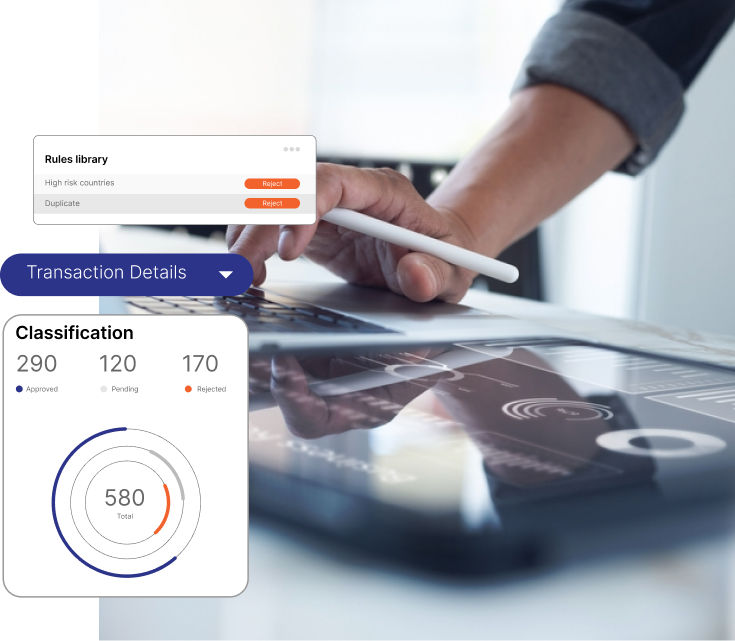
Government-Connected KYC for Saudi Arabia
Integrate Absher and the National Address System with azakaw’s KYC platform to enable real-time identity and address verification aligned with SAMA expectations.
Real-time compliance and audit trail
Automated proof of address verification provides a detailed, timestamped compliance record for each verification carried out, including details such as:
what document has been uploaded
when it has been uploaded
the result of the verification exercise
the relevant authority that confirms it
Good audit trails are essential requirements for SAMA and external auditors during the process of conducting any compliance audit.
The role of azakaw
azakaw provides digital document verification services to licensed companies in Saudi Arabia, including address verification services linked to official government systems.
Whether you are a bank, fintech company providing address verification solutions for customer onboarding at scale, or a Compliance department undertaking Corporate KYC due diligence, azakaw's platform enables accurate, consistent, and complete address verifications to ensure a smooth and secure customer onboarding.

Transform Your Business
Drive business growth and operational efficiency with azakaw, an AI-powered AML compliance solution built by experts to simplify compliance.
FAQs
Can the customer use a SPL National Address certificate as proof of address?
Yes. The SPL National Address Certificate is one of the most widely accepted proof-of-address documents in Saudi Arabia. Banks, fintech companies, government departments, and compliance teams commonly accept it.
Can a utility bill from the Saudi Electricity Company (SEC) be used as a POA?
Yes, if the bill was provided:
Is in the client's name
Shows the current address
Was issued within the last 3 months
Bills in a landlord’s name may require supporting documents.
What if the tenancy contract is not in the client's name?
Many expatriates living in shared or employer-provided accommodations may face this challenge.
They can obtain a National Address certificate (SPL), a formal letter from their employer on official company stationery stating the address provided by them, or an Absher printout confirming their registered address.
Certain banks may also accept sponsorship letters. Please advise them to contact their bank to determine which ones can accept these documents.
How long is proof of address valid in Saudi Arabia?
Most institutions require documents issued within the previous 3 months.
Although SPL certificates do not technically expire, institutions may still request recently updated records.
Can the customer provide digital or electronic copies of my documents?
Yes, as long as the documents come from legitimate and verifiable sources. PDF copies obtained from the Saudi Electricity website, the Saudi Post mobile app, or your bank's digital platform are accepted.
Is an Ejar contract mandatory?
Not always. However, Ejar-registered tenancy contracts are among the strongest forms of address verification in Saudi Arabia.
Why do banks reject proof-of-address documents?
The most common rejection reasons include outdated documents, address mismatches between official systems and submitted records, utility bills not issued in the applicant’s name, unregistered tenancy agreements, and non-verifiable screenshots or edited files.
TIP: Learn how AML compliance software for banks will change your business.
Which proof-of-address documents are considered high-risk during compliance reviews?
Documents frequently flagged during compliance reviews include screenshots, edited PDFs, informal tenancy agreements, PO Box-only addresses, and utility bills issued to unrelated third parties.
Organizations generally prioritize documents issued or validated through official Saudi government systems.
Conclusion
Proof-of-address verification plays a critical role in KYC, AML, and customer onboarding processes in Saudi Arabia. However, onboarding teams frequently face challenges caused by outdated documents, address mismatches, shared accommodation, and non-verifiable records.
Government-linked systems such as SPL National Address, Ejar, and Absher have significantly improved the reliability of address verification by providing digitally verifiable records that are widely accepted across the Saudi compliance ecosystem.
For regulated businesses operating at scale, combining official Saudi address infrastructure with automated verification workflows helps reduce onboarding friction, improve compliance accuracy, and strengthen audit readiness under SAMA and AML requirements.
PoA Saudi Arabia Overview
Related articles:


