


Source of Wealth: meaning, documents & AML requirements

Updated: Aug 29
For regulated businesses, Source of Wealth checks are a key part of understanding whether a customer’s assets come from legitimate sources.
Banks, fintechs, crypto platforms, investment firms, real estate businesses and other regulated entities may need to request Source of Wealth when dealing with high-risk customers, PEPs, complex ownership structures, large transactions or activity that does not match the customer’s profile.
The challenge for compliance teams is knowing when to ask, what evidence to collect and how to verify it without creating unnecessary friction for legitimate customers.
This guide explains what Source of Wealth means in AML, how it differs from Source of Funds, when it should be requested, which documents are accepted and how businesses can build a risk-based verification process.
Source of Wealth - Key Takeaways |
|
|
|
|
|
|
|
|
What is the Source of Wealth in AML?
The "source of wealth" (SOW) is the origin of a customer's total assets, explaining how they created their overall net worth over time.
Providing complete and accurate SOW details is a key aspect of Enhanced Due Diligence and helps identify if a customer’s financial profile is consistent with any illegal activities.
Why financial institutions ask for it
Banks, Fintech companies, Wealth Managers, and Crypto platforms ask customers for information on their SOW as it is a requirement set by regulators.
FATF Recommendation 12 requires Enhanced Due Diligence for High Risk Customers, including PEPs (Politically Exposed Persons), which includes identifying their SOW and Sourcing of Funds.
Without this information, you cannot verify if the assets your customers hold or deal with are consistent with the information you know about them and their clean financial record.
In addition to complying with laws and regulations, conducting SOW reviews forms part of the critical defences needed to combat money laundering.
If a customer claims to be a retired school teacher but deposits huge amounts of cash, there is a clear discrepancy in their financial profile, which SOW verification aims to identify.
In 2022, the Financial Conduct Authority (FCA) fined Santander UK £107. 7 million for inadequate customer due diligence, including weak SOW checks conducted on high-risk accounts.
Role in risk-based compliance frameworks
Verifying an SOW contributes to the broader risk-based approach (RBA) needed by FATF and most countries’ anti-money laundering (AML) strategies.
The approach of proportionality applies here; the extent and depth of SOW checks needed to deal with a specific risk will be based on the customer and/or transaction under review.
For example, a low-risk retail customer opening a basic savings account would only need to provide limited Source of Wealth details, whereas a high net worth individual (HNW) wanting to move large sums of money to a private banking platform will need to provide detailed documentary evidence about the origins of their total assets.
Read also: What are the key areas of bank compliance?

Source of wealth vs source of funds: what's the difference?
Source of Wealth (SOW) explains the total amount of wealth that a customer has built up over time: their total assets minus liabilities, and how they were earned. This gives a broad overview of their financial situation.
Source of Funds (SOF): identifies the place of origin of the funds used in a particular transaction or deposited at a specific time. This asks about details related to transactions.
Both SOW and SOF are needed under EDD rules, and both require confirmation, not just disclosure. An individual may have good sources of wealth (such as experience in the financial sector) but use money in a transaction coming from an unknown source.
The ability to identify the discrepancies helps to create clear differences between the sources of wealth and the sources of funds.
Examples of each in practice
SOW example: A private banking client indicates their wealth came from selling a technology company they founded in 2010. SOW verification involves obtaining more information about this, such as company sale documents, completion certificates and tax returns that disclose the capital received.
SOF example: The same client deposits $2 million to buy real estate. In relation to this transaction, getting information about SOF means verifying that these funds come from their identified bank account and not from some external source outside their self-declared financial picture.
Why source of wealth matter in AML and KYC
SOW is not just about completing paperwork. An effective tool in detecting and preventing financial crimes is also used to identify the gathering of assets and not just their transfer.
Enhanced Due Diligence (EDD) requirements
The enhanced level of customer due diligence is carried out on high-risk customers.
EDD provides detailed information about the customer’s identity, residential address and details of his / her Source of Wealth and Funds. Goes beyond the simple identification and verification of customers' details like name, address, etc.
FATF Recommendation 19 and the European Union’s 6th Anti-Money Laundering Directive make Enhanced Customer Due Diligence mandatory for customers in countries listed as high-risk jurisdictions.
Financial Conduct Authority in the UK, FinCEN in the USA, Monetary Authority of Singapore and Dubai Financial Services Authority in Dubai have introduced equivalent customer due diligence norms within their purview.

End-to-End Compliance Software
Streamline compliance from identity and business verification to enhanced due diligence and AML transaction monitoring, reducing costs and complexity so you can scale with confidence.
PEPs, HNWIs, and offshore structures
Individuals who hold or have held positions of power (as defined by the FATF), termed Politically Exposed Persons, pose significant risks of money laundering due to their capacity to control public resources and engage in corrupt activities.
Source of wealth verification is required for PEPs under FATF Recommendation 12 and beyond basic Enhanced Customer Due Diligence.
Our experience tells us that financial regulators expect banks to gather independent information about a PEP's Source of Wealth rather than simply relying on their self-declaration.
HNWIs and customers having offshore structures create different challenges but have implications for each other.
Wealth held through trusts, foundations, or corporate entities spread across several countries may be legitimate, but without proper documentation detailing the source of funding and the entity behind such arrangements, it becomes difficult to gauge risk effectively.
Which entities need to request the Source of Wealth?
Source of Wealth should be requested by regulated entities subject to anti-money laundering and counter-terrorist financing obligations when a customer, beneficial owner, transaction, or business relationship presents a higher financial crime risk.
This usually includes banks, financial institutions, fintechs, crypto businesses, real estate professionals, casinos, law firms, accountants, trust and company service providers, asset managers and other businesses that handle money, assets, investments or high-value transactions.
Type of entity | Examples |
Banks and financial institutions | Retail banks, private banks, investment firms, payment institutions, and electronic money institutions |
Fintechs and payment providers | Payment platforms, wallets, money remittance services, and embedded finance providers |
Crypto businesses / VASPs / CASPs | Crypto exchanges, custodians, brokers, and digital asset platforms |
Asset and fund managers | Wealth managers, investment funds, private equity firms, and family offices where regulated |
Insurance companies | Especially life insurance and investment-linked insurance products |
Real estate professionals | Real estate agents, brokers, property intermediaries and developers involved in high-value transactions |
Casinos and gambling operators | Land-based casinos, online casinos, and betting platforms |
Law firms, notaries and accountants | When involved in financial transactions, company formation, real estate, tax structuring or asset management |
Trust and company service providers | Company formation agents, nominee directors, trust managers, corporate service providers |
High-value goods dealers | Art dealers, precious metals and stones dealers, and luxury goods traders |
Crowdfunding and lending platforms | Where they fall under AML/CFT obligations |
Other high-risk sectors | Depending on the jurisdiction, this may include free zone businesses, investment migration firms or intermediaries handling large-value assets |

Scale With Confidence
Simplify regulatory adherence and reduce operational costs with an all-in-one compliance platform that helps fintech companies stay ahead of evolving regulations.
When is the Source of Wealth verification triggered?
Source of Wealth should be requested when a customer, beneficial owner, transaction, or business relationship presents a higher risk of money laundering or terrorist financing.
A Source of Wealth check may be required at onboarding, during ongoing monitoring, before approving a high-value transaction, or whenever a customer’s risk profile changes.
Trigger | Context | Depth of verification | |
Onboarding | High-risk customer, HNWI, PEP | Full SOW documentary evidence | |
High-value transaction | Transaction inconsistent with profile | SOF verification for specific funds | |
Periodic review | Annual or risk-based review cycle | Updated SOW if circumstances changed | |
Suspicious activity flag | Alert or STR consideration | Enhanced SOW and SOF review | |
Risk profile change | Customer becomes PEP, moves jurisdiction | Full EDD refresh, including SOW |
What are the types of sources of wealth?
The source of wealth can be many, namely: employment income, business ownership, investments/capital gains, inheritance/gifts, property sales, trust and family wealth and cryptocurrency profits.
All relevant documents must be authentic, up to date and adequate to allow for independent verification of the specified wealth source.
Source of wealth | Description | Accepted documents |
Employment income | Salary accumulated over a career | Payslips, employment contracts, P60s / tax returns |
Business ownership | Profits, dividends, or the sale of a business | Company accounts, shareholder records, sale agreements |
Investments/ capital gains | Returns from equities, bonds, and funds | Investment portfolio reports, brokerage statements |
Inheritance/ gifts | Assets received from the estate or family | Probate/grant of letters, will extracts, gift letters |
Property sales | Proceeds from real estate transactions | Sale completion statements, land registry records |
Trust/ family wealth | Distributions from trust or family structure | Trust deed, trustee letter, distribution records |
Cryptocurrency profits | Gains from digital asset holdings | Exchange account history, wallet transaction records, tax reports |
A note on cryptocurrency as a source of wealth
Cryptocurrencies are increasingly being recognised as a valid means to create wealth; however, they need specific documents to support it.
Any individual claiming to have generated wealth through cryptocurrencies shall provide comprehensive details, including historical data of exchange accounts indicating transactions, period of holding & resultant dispositions.
Simple self-declarations of wallet balances without detailed transaction history will not suffice.
Financial Regulators in the United Arab Emirates, the UK and Singapore have released guidelines stating that the source of wealth based on Cryptocurrencies should be thoroughly verifiable, just like any other form of assets.
Read more about: AML compliance in cryptocurrency
Secure Crypto Compliance Software
Address the distinct compliance needs of digital assets with AI-powered tools designed to simplify regulatory challenges and drive innovation in blockchain technology.
Common challenges in the source of wealth verification
Even experienced compliance teams struggle to deal with SOW checks efficiently. The situations described below pose challenges, and this is how financial institutions address them.
Incomplete or unverifiable documents
In some instances, customers are unable to provide details about their assets earned many years ago, particularly in countries with poor systems for maintaining information about financial transactions.
For example, a businessman in a developing country might not have any bank statements or accounts from the 1990s.
In cases like these, Financial Institutions follow a procedure of corroboration to provide sufficient information about customers' financial status, such as details about a progressive increase in assets, property deeds, tax returns, etc., to form a clear and consistent picture.
Complex ownership structures
Assets held through multiple layers, including trusts, special purpose vehicles and family offices, require detailed investigation to identify the actual beneficial owner(s) and details about the funds utilised to establish the underlying layers.
SOW verification and UBO identification are two sides of the same coin and are integral to one another.
Where asset holding structures are put in place to conceal the source of wealth rather than meet valid tax, succession or estate planning objectives, features of a high degree of opaqueness create suspicious elements of money laundering!
Cross-border wealth sources
A client with assets held in several countries: a company sold in one country, property in another, investment assets administered in a third, presents challenges in confirming the source of wealth (SOW).
Each jurisdiction has its own set of rules regarding necessary financial documents, languages and limitations on access to information.
Certified translations and local legal advice through correspondent banks help in managing such cases.
FATF’s list of high-risk countries is highly relevant in this context: financial assets originating from ‘grey’ or ‘black’ listed jurisdictions need to be dealt with increased vigilance supported by comprehensive documentation.

The Best Worldwide AML Solution
Centralise, simplify, and scale your compliance efforts across jurisdictions and regulators. Use regulator-specific templates or create your own rules and workflows.
Balancing compliance with customer experience
Excessive requirements for providing financial documents to establish a source of Wealth can lead to declined conversion rates during customer onboarding and induce frustration amongst high-net-worth customers who view the process as intrusive.
A risk-based approach provides a practical solution to provide details on the extent and depth of documentation needed based on the identified level of risk, rather than imposing a blanket upper limit on all clients.
Technology-enabled onboarding platforms, which enable the provision and validation of SOW documents digitally, contribute towards the reduction in difficulties associated with asking for paper-based documents.

Accelerate Global User Onboarding
Transform end-to-end onboarding with customised flows tailored to your business needs using our secure solution, while ensuring a great user experience.
How technology supports source of wealth checks
Manually verifying SOW does not scale up well. With increasing volumes of customers and stringent regulatory requirements, effective measures to collect, validate and monitor SOW information are necessary to manage risks related to financial terrorism, financing and money laundering.
Automated risk scoring and digital onboarding tools
Advanced online onboarding platforms can automatically identify a client’s risk profile, triggering relevant Source of Wealth documentation requirements where necessary.
This enables quick processing of low-risk clients whilst directing high-risk customers to EDD measures to obtain necessary information regarding their SOW.
Digital Document Upload, Optical Character Recognition (OCR) features and Automated Validation features automate the process of manually processing SOW documents.
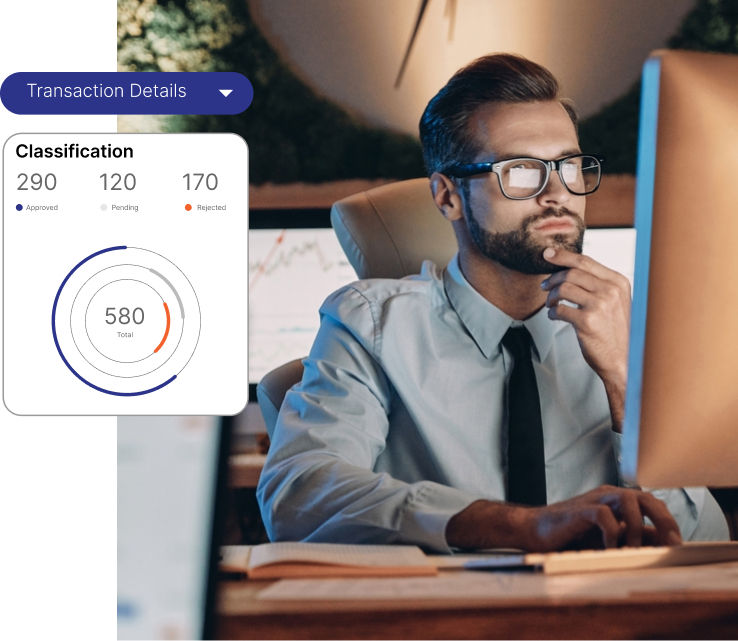
AI-Powered AML Solution
Automate and accelerate onboarding through automated capture and authentication, significantly reducing manual intervention and team errors.
Adverse media, sanctions screening and case management
The tasks involved in carrying out Source of Wealth verification cannot be done in isolation. Carrying out adverse media checks needs to be carried out simultaneously.
Sanctions and PEP screening help to identify if the client’s financial asset sources mentioned in the Client Due Diligence report involve any benami entities or deals linked to politicians.
Centralized Case Management systems keep a record of all the aspects verified.
Effective audit trails are required by supervisory authorities for conducting EDD reviews!

FAQs
Is the Source of wealth mandatory?
For high-risk customers, PEPs, and HNWIs, SOW verification is a regulatory requirement under FATF Recommendations and national AML legislation.
For standard-risk retail customers, it may not be explicitly mandatory at onboarding, but can be triggered by transaction behaviour or risk profile changes.
Financial institutions must apply a risk-based approach to determine when SOW checks are required.
Who needs a source of wealth verification?
Any customer classified as high risk, including PEPs, HNWIs, those from high-risk countries and individuals with complex offshore structures, requires SOW verification.
This also applies to customers who exhibit transaction behaviour that deviates from their known profiles, during our regular EDD (Identifying Beneficial Ownership) procedures, or if there are significant changes to their risk profile during the course of our relationship with them.
Can cryptocurrency be accepted as a source of wealth?
Yes. The financial gains from cryptocurrencies can serve as the source of wealth for most financial institutions subject to financial regulations. However, sufficient proof needs to be provided.
Customers must provide details of their exchange account(s), which include information such as how they acquired the digital assets, how long they have held them and details about the disposal of digital assets, along with relevant tax documents.
Bank statements indicating self-declared wallet balances without detailed transaction records cannot be considered a standalone source of wealth evidence.
How do banks verify the source of wealth?
Banks can verify the Source of Wealth using a combination of documents such as tax returns, business bank statements, sale deeds and inheritance certificates.
In cases of high-risk clients, a detailed check includes adverse media reports, sanctions and public records. The process of determining the source of wealth involves verifying it independently and not just taking client declarations at face value.

Effortless Bank compliance software
Deliver exclusive banking services without compromising on stringent compliance requirements.
Conclusion
Verification of sources of wealth is one of the most significant and underestimated components of a comprehensive anti-money laundering (AML) compliance program.
This is the area where regulators want financial institutions to look beyond what customers are doing with their money and find out how they acquired it.
The FCA’s £107.7m fine issued to Santander serves as a reminder that inadequate Source of Wealth (SOW) checks create not only process weaknesses but also risks of enforcement action.
With increasing global emphasis on Effective Dealer Due Diligence (EDD) measures and Financial Action Task Force (FATF) peer reviews giving close attention to good practices in verifying Sources of Wealth, institutions with effective, well-documented and risk-identified SOW systems will withstand scrutiny better.
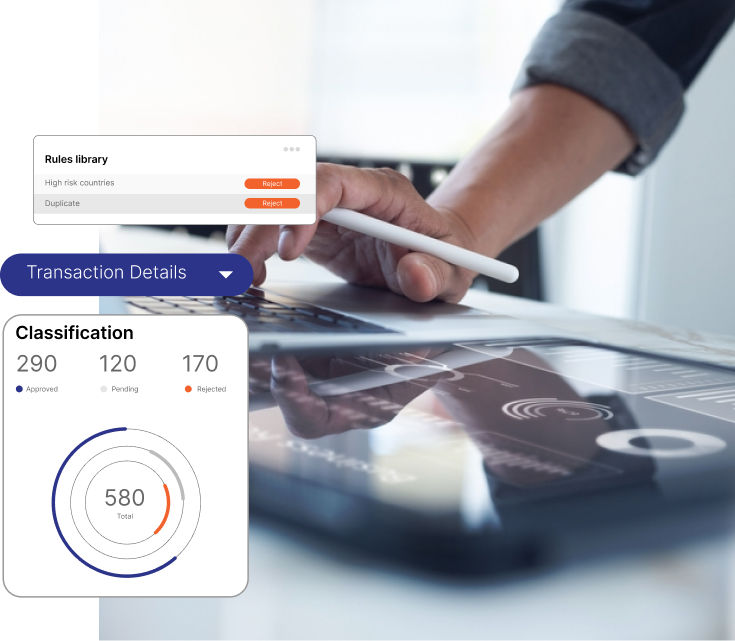
Protect Your Business
Discover how azakaw helps regulated businesses automate source of wealth verification. Increase efficiency and strengthen your ability to defend your anti-money laundering efforts.
Source of Wealth video summary
Related articles


