


Top countries that use crypto: why it matters, and what it means for AML compliance

Cryptocurrency adoption in developing countries is not mainly a financial fad. It is often a response to weak banking access, expensive remittances, inflation, and limited access to US dollars.
That is why India, Nigeria, and others rank highly in the top countries that use crypto. People use Bitcoin and stablecoins to move money, protect savings, and access financial services that traditional systems do not provide.
For banks, VASPs, and compliance teams, this creates AML exposure through P2P platforms, missing Travel Rule data, sanctions risk, and an unclear source of funds.
This guide lists developing countries that rely on crypto, explains the main adoption drivers, and outlines what institutions should do about the risk.
Key takeaways: top countries that use crypto |
|
|
|
|
|
Why do developing countries use cryptocurrency?
People in developing countries often use cryptocurrency because it provides access to financial services that local banking systems fail to deliver. The main drivers are limited bank access, expensive remittances, currency depreciation, inflation, and restrictions on access to foreign currency.
Stablecoins such as USDT are especially important because they give users exposure to dollar-denominated value without needing a foreign bank account. Bitcoin is often used as a store of value or cross-border transfer tool, while P2P platforms help users convert between crypto and local currency.
For compliance teams, this means crypto activity in emerging markets is not always speculative. It may reflect legitimate financial need, but it can still create AML risk when funds move through unregulated P2P channels.

Stay Compliant During the AML Journey
Centralise, simplify, and scale your compliance efforts across jurisdictions and regulators. Use regulator-specific templates or create your own rules and workflows.
Financial exclusion: the unbanked population driver
The World Bank's 2021 Global Findex estimated that 1.4 billion adults were left unbanked worldwide: the majority concentrated in sub-Saharan Africa, South Asia and parts of the Middle East.
In Nigeria, it was estimated that around 38% of adults didn't have a bank account in 2022, according to EFInA (Enhancing Financial Innovation & Access).
Cryptocurrencies, especially those accessed via a smartphone and a P2P platform, bypass the entire branch structure and documentation requirements that keep a major part of these populations out.
Remittances: cheaper and faster cross-border transfers
The World Bank reported that sending $200 internationally averaged a cost of 6.2% in Q1 2024, a long way off from the UN Sustainable Development Goal target of 3%. Sub-Saharan Africa was the costliest receiving area, with an average cost of 7.7% per transaction.
Bitcoin and stablecoins (mainly USDT) have become a reasonable substitute for traditional methods.
Nigerian migrant workers regularly use peer-to-peer cryptocurrency platforms to send remittances costing less than 2%, thus completely avoiding all traditional wire transfer charges.

AML Compliance for Banks
Deliver exclusive banking services without compromising on stringent compliance requirements. Turn significant compliance challenges into opportunities to grow!
Currency instability and inflation protection
When a country's money loses value super-fast, its citizens seek safe-haven assets outside their local financial system.
Nigeria's naira lost over 70% of its value compared to the US dollar between 2022 and 2024. Pakistan's rupee plummeted from approximately 180 to over 300 per dollar over the same time.
In both countries, Bitcoin and dollar-pegged stablecoins such as USDT serve as an inflation hedge and dollar savings account for those who can't access US dollars through normal banking channels.
Capital controls and access to dollar-denominated assets
Countries with tight capital controls see an especially high volume of peer-to-peer (P2P) cryptocurrencies.
In Nigeria, the CBN's imposition of exchange rate controls led to a significant gap between official and black-market rates.
Crypto effectively became a way to obtain dollar-denominated value outside those controls.
For compliance teams, this situation represents a major AML and sanctions risk indicator: the use of crypto driven by evasion of capital controls falls into a sort of regulatory grey area even when individual users are not involved in crime.

How crypto adoption is measured and why it matters for compliance
Not all crypto adoption metrics are created equal. Understanding how the most-cited index works helps compliance teams make sense of the data, rather than simply accepting rankings at face value.
Chainalysis Global Crypto Adoption Index explained
The Chainalysis Global Crypto Adoption Index, published each year and generally regarded as the most methodologically robust country-level adoption measure, ranks countries by combining on-chain transaction volume weighted for purchasing power parity, P2P exchange trade volume and DeFi activity.
Crucially, it weights metrics against per-capita GDP to reflect grassroots adoption rather than the sheer size of transactions. A $50 transaction in Lagos is given far more weight than a $50,000 institutional transaction in London.
The result shows exactly where regular people do use crypto every day: not where the biggest capital flows just happen to land.
Why is P2P crypto trading an AML risk?
P2P crypto trading is an AML risk because buyers and sellers transact directly, often outside licensed exchange infrastructure.
In many high-adoption markets, P2P platforms do not provide the same level of KYC, suspicious transaction reporting, or Travel Rule information expected from regulated VASPs.
This creates a visibility gap for banks and crypto firms receiving funds from those markets.
A transfer may represent a legitimate remittance, but it may also involve capital-control evasion, sanctions exposure, or funds from an unknown source.
Institutions should not automatically de-risk these customers, but they should apply enhanced due diligence, wallet screening, source-of-funds checks, and transaction monitoring.
Read more about: AML compliance in crypto

What are the Top 10 countries by crypto adoption?
According to Chainalysis’ Global Crypto Adoption Index, the top 10 countries that use crypto are India, Nigeria, Vietnam, the United States, Ukraine, the Philippines, Indonesia, Pakistan, Brazil, and Kenya.
These markets rank highly because crypto adoption is not driven only by speculation. In many of them, people use Bitcoin and stablecoins to solve practical financial problems, as mentioned before.
1. India: the world's largest grassroots crypto market
India heads the list of countries that use cryptocurrency and Chainalysis index not because it holds the most institutional capital; it doesn't, but because of the massive number of ordinary people using cryptocurrency in their everyday financial lives.
Out of a population of 1.4 billion, even moderately low individual adoption rates can translate into enormous transaction volumes.
Adoption driver:
India's crypto adoption comprises two quite distinct forces. Firstly, there's a massively technically literate young population holding smartphones but having limited access to global investment products.
Secondly, there's a major diaspora community, particularly in the Gulf, using cryptocurrency to send remittances back home at a lower cost than traditional wire services. India received $125 billion in remittances in 2023, according to World Bank data, making it the world's biggest remittance-receiving nation.
Investment and speculation are dominant, with a secondary yet significant remittance use case. Stablecoins are increasingly used for cross-border transfers, while Bitcoin and Ethereum continue to be the main investment assets.
Regulatory and AML environment:
In 2022, India set a 30% flat tax on crypto gains alongside a 1% tax deducted at source on each and every transaction, part of one of the most aggressive crypto tax systems globally.
The Financial Intelligence Unit (FIU) will require crypto exchanges to register and abide by AML reporting requirements.
Several major exchanges, including Binance, were blocked by the FIU in late 2023 because they hadn't complied before being allowed to reinstate their registration.
The overall framework is structured but still evolving, with continuous regulatory debate over offshore exchange access.
Did you know that multi-account fraud is common in the crypto industry?
2. Nigeria: P2P adoption driven by currency controls & remittance costs
Nigeria has the second position on the list of developing countries that rely on crypto. It consistently ranks among the top two worldwide in grassroots crypto adoption, and the story behind that ranking is one of the most telling case studies of crypto's role as a substitute for financial infrastructure.
Adoption driver:
The Central Bank of Nigeria's 2021 directive stopping banks from facilitating crypto transactions was designed to control the market. Instead, it led to a rapid growth in P2P adoption. Nigerians just sidestepped the banking system.
When the CBN somewhat reversed that position in late 2023, P2P trading had already taken hold. The naira, having lost more than 70% of its value against the US dollar between 2022 and 2024, made USDT and Bitcoin essential as inflation hedges for middle-class Nigerians who could not obtain foreign currency through regular channels.
Dominant use case:
P2P transfers dominate, both for remittances and for getting at dollar-denominated value.
Nigeria got $20. 9 billion in remittances in 2022, according to World Bank figures, the biggest inflow in sub-Saharan Africa, with an important and constantly increasing part moving through crypto channels.
Regulatory and AML environment:
The Nigerian SEC set up a VASP framework in 2023, giving some form to the market. But enforcement is still much in its early stages.
The public 2024 dispute between the Nigerian government and Binance, resulting in the detention of two executives and temporary platform restrictions, shows that regulatory assertiveness is escalating.
For international institutions, Nigerian P2P flows present a documented high-risk route: a high volume, limited regulatory supervision over originating platforms and capital control evasion as a documented use case.
Read more about: High-risk customers in AML
3. Vietnam: speculation, gaming, and a regulatory void
Vietnam ranks within the top three countries that use crypto in the Chainalysis index year after year. This happens due to a combination of a strong speculative trading culture and a very high involvement with blockchain-based games.
Adoption driver:
Vietnam's crypto community is primarily made up of younger, tech-savvy users who got into the market through play-to-earn (P2E) gaming, especially Axie Infinity, which was created by a Vietnamese studio and attracted many millions of Vietnamese players when it hit its peak in 2021.
Lots of participants earned good money playing Axie, converting SLP and AXS tokens into stablecoins and their local currency. This gaming-led entry point created a massive base of crypto-literate users who then started trading more broadly.
Dominant use case:
Speculation and trading dominate, with gaming assets being a important secondary use case. Remittances have a smaller part to play compared to Nigeria or the Philippines, although cross-border peer-to-peer transfers are seeing growth.
Regulatory and AML environment:
Vietnam still doesn't have any official crypto regulatory framework.
The State Bank of Vietnam says crypto isn't legal tender and that financial institutions can't be involved in crypto transactions. This leaves a situation where there is quite widespread adoption happening in a sort of regulatory void with no VASP licensing, no actual AML requirements for crypto platforms and no travel rule implementation.
To global institutions receiving transfers associated with Vietnamese crypto activity, the lack of regulatory structure right at the source is a significant AML risk factor.
Best Multiple-Jurisdiction AML Tool
Centralise, simplify, and scale your compliance efforts across jurisdictions and regulators. Use regulator-specific templates or create your own rules and workflows.
4. United States: institutional depth meets retail breadth
The US ranks fourth among the top countries that use bitcoin and cryptocurrency, lower than one might expect, basically because the index uses per capita GDP, which normalises for the US's extremely high income levels. However, in terms of transaction volume, the US is the world's largest crypto market by a significant margin.
Adoption driver:
The US market brings together substantial institutional investment and broad retail participation.
When spot Bitcoin ETFs were approved in January 2024, including ones from BlackRock, Fidelity and Invesco, it meant that Bitcoin exposure was included in everyday investment portfolios for the first time without needing to physically hold any crypto.
Over $10 billion in net inflows had been seen by Bitcoin ETFs just two months after they launched, according to Bloomberg data.
Dominant use case:
Investment and portfolio diversification make their mark. Remittance use does exist, but it is much less deeply ingrained in the system than it is in some other emerging markets, mainly because the US has easy access to cheap digital payment systems via services such as Zelle and Venmo.
Regulatory and AML environment:
The US has the most advanced VASP regulatory framework worldwide. FinCEN requires money services businesses, including crypto exchanges, to register and abide by BSA AML duties, including KYC, suspicious activity reporting and Travel Rule compliance.
The SEC has continued to pursue very active enforcement action against unregistered securities offerings.
OFAC has designated lots of crypto addresses, and Chainalysis's blockchain analytics are pretty widely used by all sorts of US-regulated institutions as the first line of defence for their compliance needs.
5. Ukraine: wartime crypto as a lifeline
Ukraine's appearance at number five in the Chainalysis index comes from a well-documented origin: the Russian invasion in February 2022 immediately and desperately required fast, censorship-resistant value transfer that traditional banking infrastructure could not be relied upon to provide.
Adoption driver:
In the immediate aftermath of the invasion, Ukrainian citizens turned to cryptocurrency to save their savings since bank branches were closing or had become inaccessible, to receive donations from abroad and to transfer value across borders while they were displaced.
The Ukrainian government took in more than $100 million in cryptocurrency donations in the first year of the war, based on Elliptic tracking data, and used these funds to buy military equipment and supplies.
Dominant use case:
Savings preservation and cross-border donations stood out. Cryptocurrency acted as a practical financial tool when the traditional system was severely disrupted, a use case different from speculation or remittances.
Regulatory and AML environment:
Ukraine passed formal legislation recognising cryptocurrency as a legitimate financial instrument back in 2022, one of the most forward-thinking regulatory frameworks in Eastern Europe.
The legislation set up a licensing system for VASPs and brought Ukraine's framework into line with FATF standards.
From a compliance viewpoint, Ukraine's cryptocurrency flows represent quite complex risks:
wartime displacement
cross-border aid flows
documented use of cryptocurrency by both state and non-state actors during the conflict.
Blockchain analysis is essential for determining Ukrainian cryptocurrency exposure.
TIP: Read more about anti-money laundering signs and red flags.
6. Philippines: OFW remittances and play-to-earn on a large scale
The Philippines holds one of the world's most compelling crypto adoption stories driven by two powerful and somewhat overlapping forces: overseas worker remittances and blockchain-based gaming.
Adoption driver:
Around 10 million Overseas Filipino Workers (OFWs) send money back home from places such as the UAE, Saudi Arabia, Hong Kong and the US.
Traditional remittance corridors to the Philippines have fees averaging 4 to 6 per cent, which crypto peer-to-peer transfers undercut.
Separately, Axie Infinity's play-to-earn model drew in millions of Filipino players from 2020 to 2022, with some rural households earning their main income through the game. This created an unusually crypto-literate base outside the major urban areas.
Dominant use case:
Remittances and P2E gaming income, with growing investment use as the user base matures.
Regulatory and AML environment:
The Bangko Sentral ng Pilipinas (BSP) developed a VASP licensing framework back in 2021, making the Philippines one of Southeast Asia's better-structured crypto regulatory environments.
Licensed VASPs have to follow BSP AML rules, including KYC and suspicious transaction reporting. The framework is quite well-developed, but enforcement resources are a bit limited and unlicensed P2P activity still represents a significant amount.
Best Multiple-Jurisdiction AML Tool
Centralise, simplify, and scale your compliance efforts across jurisdictions and regulators. Use regulator-specific templates or create your own rules and workflows.
7. Indonesia: commodity-regulated crypto and young investor base
Indonesia is the fourth most populous nation globally, with a median age of 30 and high smartphone penetration, demographics that have led it to be ranked in 7 amongst the top 10 countries that use crypto.
In short, this is how younger investors seek accessible ways into the financial markets.
Adoption driver:
Speculative investment drives things, especially amongst millennials and Gen Z, who see crypto as a way more accessible than the Jakarta Stock Exchange.
Financial inclusion is secondary; although Indonesia has seen progress in bank penetration, there remains a significant rural population that is poorly served by traditional financial infrastructure.
Dominant use case:
Investment and speculation with DeFi participation are growing. Remittance use is less central here compared to the Philippines or Vietnam, though cross-border P2P transfers do exist within the Indonesian diaspora.
Regulatory and AML environment:
Indonesia treats crypto as a commodity rather than a financial instrument, so oversight sits with the Commodity Futures Trading Regulatory Agency (BAPPEBTI) rather than the financial regulator OJK.
This does create a kind of unusual compliance landscape; crypto trading is perfectly legal and regulated, but under commodity law rather than financial services law.
BAPPEBTI demands exchange registration. In 2023, the regulatory framework started its transition towards OJK oversight as part of broader financial sector reforms. Indonesia thus provides a relatively structured but constantly evolving compliance environment to VASPs and banks.
8. Pakistan: Rupee collapse, remittances and unregulated P2P market
Pakistan's position in the Chainalysis top 10 shows off the acute economic pressure instead of a love for technology.
The country started 2024 facing one of the worst currency crises in Asia, and crypto has appeared as a quite practical solution to financial instability at the household level.
Adoption driver:
The Pakistani rupee's collapse, from about 180 to over 300 per US dollar between 2022 and 2024, pushed up the need for USDT and Bitcoin as inflation hedges.
Pakistan's huge diaspora, especially in the Gulf, UAE and UK, also uses P2P crypto to send remittances back home.
The World Bank said Pakistan got $27 billion in remittances in 2022, the sixth biggest globally, a very big part of which flows through unofficial and crypto channels because of the difference in exchange rates between official and hawala rates.
Dominant use case:
Inflation hedging and remittances are roughly equal. Dollar-pegged stablecoins are super popular among Pakistani users who want USD exposure without having access to foreign currency through formal banking services.
Regulatory and AML environment:
Pakistan doesn't have a formal VASP licensing framework by 2024. The State Bank of Pakistan has told financial institutions at different times not to do crypto-related transactions, though enforcement hasn't been very consistent.
There is a very large, very active P2P market that operates almost without any supervision.
9. Brazil: Latin America's most-structured crypto market
Brazil stands out from almost all the other top countries that use crypto and bitcoin in our list, since its crypto adoption is happening right in the middle of a pretty established regulatory setting.
The country has very rapidly started building a proper framework, making it one of the more compliant high-adoption markets worldwide.
Adoption driver:
Financial inclusion plays a significant role in Brazil's adoption story - although Brazil's banking penetration is much higher than in sub-Saharan Africa, a largely low-income population remains underserved by traditional financial services.
Speculative investment is also pushing adoption forward, especially via the country's huge retail investor base, which has always been super active in the equity and commodity markets.
Primary use case:
Investment is the primary use case, with DeFi participation being notably higher than in almost every other emerging market. Stablecoin use in everyday transactions is expanding in areas where the Brazilian real has experienced high inflation.
Regulatory and AML environment:
Brazil passed wide-ranging crypto legislation in 2022, and the Banco Central do Brasil became the principal VASP regulator in 2023.
Licensed crypto exchanges must comply with AML requirements, including KYC, suspicious transaction reporting, and Travel Rule obligations.
Brazil's setup is one of the most developed in Latin America and closely follows the FATF guidelines.
To global companies, Brazil represents a somewhat lower-risk emerging market crypto exposure as opposed to Pakistan or Vietnam. The regulatory infrastructure works, and there's an active enforcement system.
10. Kenya: bridging M-Pesa's cross-border gap with crypto
Kenya has a unique spot in the whole global crypto adoption scene. Already having one of the world's leading mobile money systems in M-Pesa, crypto has still managed to carve out a sizeable niche in areas where M-Pesa doesn't perform as well.
Adoption driver:
M-Pesa basically rules domestic Kenyan payments, and it has made some serious inroads: over 90 per cent of Kenyan adults reportedly use it, according to data provided by Safaricom.
However, M-Pesa's cross-border transfer fees are significantly higher than domestic ones, and corridors to the Gulf countries, where many Kenyan migrant workers reside, are still pricey.
Crypto P2P steps in to fill this gap: Kenyan workers based in the UAE and Saudi Arabia are now sending remittances back to their families with Bitcoin and USDT at costs far lower than M-Pesa's international corridor fees.
Primary use case:
Cross-border remittances with speculative investment are starting to appear amongst younger, urban users.
There is already a fully set-up crypto-to-M-Pesa conversion route in Kenya - recipients can convert their crypto to M-Pesa via local P2P marketplaces, creating a relatively smooth journey for users, even though it exists outside the boundaries of the regular financial system.
Regulatory and AML environment:
The Capital Markets Authority (CMA) has created a regulatory sandbox framework for VASPs and has seen several exchange applications. Nevertheless, the complete licensing rules remain pending until 2024, and the majority of crypto activity in Kenya continues to run outside a defined regulatory frame.
The Central Bank of Kenya has given public notices on the dangers of cryptocurrency, though it hasn't banned it entirely.
To compliance teams, the flow of cryptocurrencies in Kenya paints a complex picture: the actual use case is a valid remittance activity, but the lack of VASP licensing suggests there are few, if any, AML controls in place at the source of those flows.
AML and compliance implications: what high crypto adoption means for your institution
Extremely high grassroots crypto adoption in markets that are almost completely unregulated or poorly regulated creates specific, documented AML risks that all worldwide institutions operating in these areas must see and manage.
Crypto as a tool to evade sanctions and currency controls
Those very same features that attract genuine remittance customers to crypto, pseudonymity, rapid transfer times, low fees and an international presence, also attract it to sanctions evasion and to getting around capital controls.
OFAC has identified numerous cryptocurrency addresses associated with Iranian, North Korean, and Russian actors.
In markets subject to currency restrictions, even law-abiding individuals may turn to crypto in ways that circumvent these restrictions, generating a compliance problem for institutions processing the resulting flows if they are not adequately screened.
Blockchain AML Compliance
Address the distinct compliance needs of digital assets with AI-powered tools designed to simplify regulatory challenges and drive innovation in blockchain technology.
P2P platforms and the de-risking challenge
P2P cryptocurrency trading largely falls outside the VASP regulatory framework in nearly all high-adoption emerging markets. When such flows do reach the regulated financial infrastructure, the institution receiving them will face the challenge of identifying funds from a virtually unmonitored source.
The FATF has pointedly warned against wholesale de-risking, since this simply sends activity even more deeply underground. The necessary response is carefully calibrated EDD rather than blanket refusal.
FATF Travel Rule application in high-adoption jurisdictions
FATF Recommendation 16 requires VASPs to collect and transmit originator and beneficiary information for virtual asset transfers exceeding the established threshold.
In high-adoption developing markets, this rule is applied inconsistently: while Nigeria's SEC framework incorporates Travel Rule provisions, its enforcement remains limited.
Kenya, Pakistan, and Vietnam lack any formal implementation. For global VASPs and banks that receive transfers from these markets, the absence of Travel Rule information from their counterpart institutions creates a documented compliance gap that requires explicit management.
Blockchain AML Compliance
Address the distinct compliance needs of digital assets with AI-powered tools designed to simplify regulatory challenges and drive innovation in blockchain technology.
Blockchain analytics: tracing flows from high-risk markets
Platforms for blockchain analytics, including Chainalysis, Elliptic, and TRM Labs, let compliance teams trace the origin of crypto flows even when the originating institution hasn't provided Travel Rule data.
For institutions receiving crypto flows from high-adoption markets, blockchain analytics soon becomes a basic expectation rather than an optional extra.
What VASPs and banks need to do in these markets
Knowing there's a risk but doing nothing isn't being compliant. Here are the exact steps your institution should take if it operates in or serves clients in high-adoption developing markets.
Enhanced due diligence for customers in high-adoption jurisdictions
Apply enhanced due diligence (EDD) to clients who send or receive substantial amounts of cryptocurrency from Nigeria, Pakistan, Kenya, Vietnam, or other markets where peer-to-peer transactions occur frequently and regulated VASP infrastructure is not very well developed.
Get documentation of the source of funds for crypto deposits, such as the client's exchange account history, wallet transaction records and all relevant tax documents
Screen wallet addresses against blockchain analytics platforms before processing transfers coming from high-risk markets.
Keep watch for patterns of capital control evasion, such as extremely frequent small transactions, round-number transfers, or repeatedly using peer-to-peer platforms within the transaction metadata.
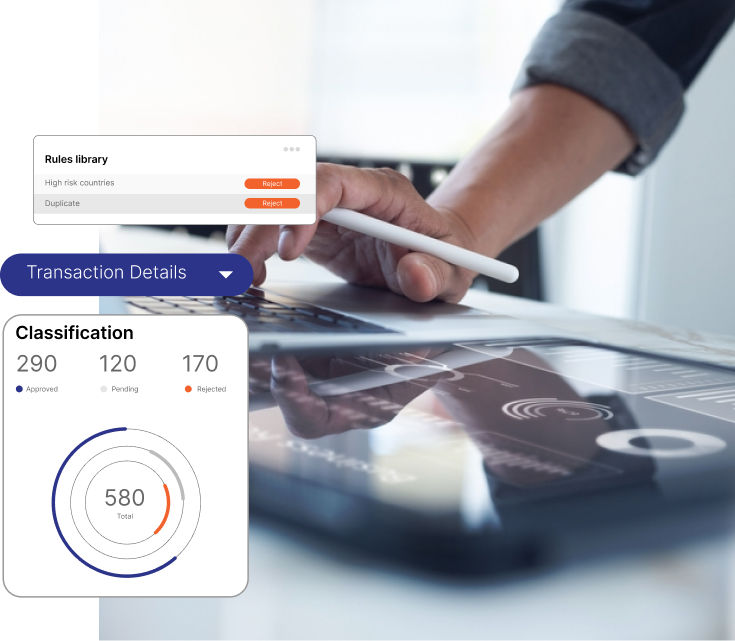
Ready to Scale With Confidence?
Streamline source of funds verification through automated onboarding, risk-based due diligence, document collection, transaction monitoring, case management and audit-ready compliance records.
Regulatory licensing requirements by country
UAE: VASPs must register with VARA in Dubai or with FSRA in the Abu Dhabi Global Market; full licensing is required if they plan to offer retail services directly to customers. (TIP: Read more about AML Compliance in the UAE)
South Africa: In 2022, the FSCA classified cryptocurrency as a financial product. VASPs must now register with the FSCA and comply with FICA's AML requirements.
Nigeria: the SEC's 2023 VASP framework demands registration; enforcement has been escalating ever since the Binance dispute.
AML Saudi Arabia: SAMA and the CMA maintain a strict "watch-and-warn" stance with no standalone VASP licensing framework available yet; crypto activities are restricted to authorised fintech channels and tight regulatory sandboxes.
Kenya: the CMA's sandbox will accept applications; the complete licensing framework remains pending until 2024, as far as we know.
Kuwait: The CMA and MOCI enforce an absolute prohibition on all virtual asset operations; crypto payments, investment services, and mining remain completely illegal to comply with FATF standards. (Read also: Anti-Money Laundering Law in Kuwait)
Pakistan: There isn't a fully formed VASP licensing framework; VASPs that are active in this market will continue to hold unresolved regulatory risks.
Philippines: BSP's licensed VASP framework went live back in 2021; this represents one of Southeast Asia's better-structured settings.
Brazil: Banco Central do Brasil took over as the primary VASP regulator back in 2023; the framework very closely follows FATF standards.
Oman: The CMA (now FSA) launched its specialised VASP framework via Decision No. E/35/2023; all virtual asset providers operating in or targeting the Sultanate must formally register and implement strict AML/CFT protocols.
Best AML Compliance Tool
Centralise, simplify, and scale your compliance efforts across jurisdictions and regulators. Use regulator-specific templates or create your own rules and workflows.

Frequently Asked Questions
Which country uses Bitcoin the most in the world?
India leads the list of countries that rely on cryptotops in the Chainalysis 2024 Global Crypto Adoption Index, followed very closely by Nigeria.
Why do developing countries rely on cryptocurrency?
Four key drivers here: financial exclusion (no bank access), very high remittance costs averaging 6.2% worldwide, currency instability creating a huge demand for inflation hedges, and capital controls restricting access to foreign currency.
In markets where banking doesn't serve the majority, crypto fills the structural gaps that traditional finance still hasn't closed.
What is Chainalysis' Global Crypto Adoption Index?
Chainalysis' Global Crypto Adoption Index ranks countries based on grassroots crypto adoption using on-chain transaction volume, P2P trading volume and DeFi activity, each weighted by per capita GDP purchasing power parity.
This weighting will capture where everyday individuals use crypto, not where the largest institutional flows occur.
Is cryptocurrency legal in Nigeria, Kenya and South Africa?
Nigeria's SEC set up a VASP framework in 2023; crypto is legal but highly regulated. South Africa's FSCA classified crypto as a financial product in 2022, requiring VASP registration under FICA. Kenya's CMA runs a sandbox; full licensing rules are still pending.
In all three, the regulatory environment is constantly changing, thus creating ongoing compliance uncertainty for VASPs.
How is crypto applied for remittances in less developed countries?
Generally, on P2P platforms, a sender converts their local currency to USDT or Bitcoin, sends it to the recipient's wallet, and the recipient then converts it back to their local currency through a local P2P marketplace or exchange.
The overall cost is often less than 2%, compared with 6-8% for traditional wire transfers to sub-Saharan Africa or South Asia.
What AML risks result from high crypto adoption for banks?
There are three main risks: unmonitored P2P flows getting into regulated infrastructure without any KYC or travel rule data; crypto being used to avoid capital controls or sanctions; and mixing of illicit and genuine flows within very high volume P2P markets, rendering it hard to determine the origin of funds without the use of blockchain analytics.
All three need more detailed due diligence frameworks that are tailored to customers exposed to cryptocurrencies.
Does the FATF Travel Rule apply to crypto in emerging markets?
FATF Recommendation 16 does apply universally, but the actual implementation varies quite a bit from one place to another. Nigeria's SEC framework actually does include travel rule provisions. Kenya, Pakistan and Vietnam have yet to formally put this into practice.
International VASPs and banks getting transfers from these markets are going to get zero travel rule data, a real compliance gap that you'll need to address in your risk framework and compensate for using blockchain analytics.
What is P2P crypto trading, and why is it an AML risk?
P2P trading brings buyers and sellers together directly, without a centralised exchange as an intermediary, so there's no mandatory KYC, no transaction reporting and no travel rule compliance at the platform level.
When P2P originated, funds moved through regulated financial infrastructure, and the receiving bank didn't have a clear view of the transaction's origin, posing a well-documented AML risk in jurisdictions with high levels of crypto adoption.
Are stablecoins more important than Bitcoin in developing countries?
Yes. In many developing markets, stablecoins such as USDT are more practical than Bitcoin because they reduce exposure to local currency depreciation while avoiding Bitcoin’s volatility. They are commonly used for remittances, savings, informal dollar access, and P2P settlement.
Which crypto adoption markets create the highest AML risk?
The highest AML risk usually appears in markets with high P2P volume, weak VASP licensing, currency controls, sanctions exposure, or limited Travel Rule implementation. Examples include Nigeria, Pakistan, Vietnam, and Kenya.
Should banks block customers exposed to crypto in emerging markets?
No. FATF discourages blanket de-risking. Banks should apply a risk-based approach using enhanced due diligence, blockchain analytics, wallet screening, source-of-funds documentation, and ongoing monitoring.
Conclusion
It's not happening in Silicon Valley or Zurich, where you'd expect to see the world's highest crypto adoption rates.
It's happening in cities like Lagos, Nairobi, Karachi, Manila and Ho Chi Minh, driven by an obvious lack of access to finance that traditional banking systems have failed to provide, and in some cases have failed to meet.
Every country on this list of top countries that use crypto has its own special adoption story.
India's scale. Nigeria's explosive growth in person-to-person transactions following the CBN's banking ban. Ukraine's wartime necessity. Kenya's gap left by M-Pesa. Vietnam's gaming-driven entry point.
Grasping these specific stories is what differentiates an AML compliance program that effectively manages cryptocurrency risk from one that resorts to a blanket de-risking approach, missing the actual risk picture.
The fundamental needs are consistently present: EDD for clients in areas where there's high adoption of cryptocurrency, blockchain analysis tools to track transactions when there isn't Travel Rule information, and verification of the origin of funds for every cryptocurrency deposit.
And, all this is under continuous monitoring that's carefully calibrated to the particular peer-to-peer and capital control dynamics of each market.
azakaw collaborates with VASPs, banks and compliance departments to address the presence of cryptocurrency in emerging markets, helping develop EDD frameworks, blockchain analytics integrations and client due diligence procedures tailored to the unique risk profiles of countries in developing nations with high levels of cryptocurrency adoption.

The AML Compliance Solution You Need
Comply with EDD regulations and onboarding procedures, including conducting risk-based documentation requests, automating verification tasks and creating reliable audit trails ready to satisfy any future regulatory inquiries.
Related articles


