


8 Best adverse media screening software in 2026 (tested)

Updated: Sep 11
Adverse media screening software helps compliance teams identify negative news and other public risk signals linked to customers, businesses, beneficial owners, and counterparties.
The best adverse media screening tools do more than find negative articles. They reduce false positives, support the languages and jurisdictions relevant to your customer base, enable ongoing monitoring, and help compliance teams turn alerts into documented, defensible decisions.
The best adverse media screening software in 2026 includes azakaw, ComplyAdvantage, LSEG World-Check, Dow Jones Risk & Compliance, LexisNexis, Sumsub, Shufti Pro, and Sigma360.
Our top pick for firms that want adverse media screening embedded inside a wider AML and compliance programme is azakaw.
Negative-news screening itself should be applied according to the firm's risk-based approach rather than treated as a universal, one-size-fits-all requirement.
How we evaluated adverse media screening software
We compared each platform based on the factors that matter most in real-world adverse media screening: source quality, language and regional coverage, false-positive reduction, ongoing monitoring, workflow and auditability, and ease of integration.
Our assessment is based on official product documentation, publicly available vendor information, industry guidance, and third-party user reviews where relevant. No competing platform paid for inclusion or placement.
Best adverse media screening software: quick comparison
Platform | Best for | Type | Standout capability | Main consideration |
azakaw | Firms wanting adverse media inside a complete AML programme, particularly in GCC and MENA | Compliance platform | Screening connected to onboarding, investigations, governance, and audit trail | Newer than the largest global risk-data incumbents |
Comply Advantage | AI-driven adverse media screening at scale | Risk intelligence and screening platform | ML-based adverse media screening, structured profiles, ongoing monitoring | May still require other systems for parts of the wider KYC/KYB lifecycle |
LSEG World-Check | Enterprises requiring established global risk intelligence | Risk data provider | Large structured risk database with extensive global and non-Latin coverage | Best suited to firms that already have workflow and case-managementinfrastructure |
Dow Jones Risk & Compliance | Firms prioritising curated source quality | Risk data provider | High-quality curated negative-news and risk intelligence | Requires an operational workflow around the data |
LexisNexis | Deep investigative and historical research | Risk intelligence and screening ecosystem | Extensive adverse-media, enforcement, news, and public-record coverage | Can be heavier than modern SaaS tools for straightforward screening |
Sumsub | Digital businesses wanting adverse media inside onboarding | KYC/AML platform | Screening alongside identity and business verification | Adverse media is part of a broader verification suite rather than the sole focus |
Shufti Pro | Firms screening customers across many markets | IDV and AML screening platform | International identity and AML screening coverage | Governance and investigation requirements may need additional tooling |
Sigma360 | Complex risk teams requiring enhanced due diligence and entity resolution | Risk intelligence platform | Adverse media combined with entity resolution and deeper risk analysis | More sophisticated than many smaller teams require |
Data provider vs full compliance platform: what is the difference?
Adverse media solutions generally fall into two broad categories: risk-intelligence and data provider and integrated compliance platforms.
Risk-intelligence and data providers
Providers such as LSEG World-Check, Dow Jones, and LexisNexis specialise in supplying financial-crime intelligence.
They are particularly useful for organisations that already have established onboarding, workflow, investigation, and case-management systems but want stronger underlying data.
For a large bank or global financial institution, that model can work extremely well.
The limitation is that the data itself does not automatically create the organisation's investigation process or governance framework.
Integrated compliance platforms
Platforms such as azakaw, Sumsub, and other broader compliance systems integrate screening with other parts of the customer lifecycle.
Depending on the platform, this can include KYC, KYB, risk assessment, ongoing monitoring, case management, escalation, transaction monitoring, and audit evidence.
This model is attractive to organisations that want the adverse-media result connected directly to the customer record and the compliance decision.
How to choose the best negative media screening software
The best adverse media screening platform is not necessarily the one with the most sources or alerts. It is the one that can identify relevant risk accurately and fit that information into your compliance process.
Before selecting a provider, test these five areas.
1. Test coverage using cases from your own markets
Do not rely only on headline source counts.
Give the vendor real or representative names from the countries, industries, and customer segments you serve. Check whether the platform finds relevant local media, regulatory notices, enforcement actions, court information, and other sources that matter to your risk profile.
For firms operating across the GCC and MENA, this should include Arabic-language sources rather than English-language reporting alone.
Ask the vendor: Can you demonstrate results for the jurisdictions and languages where our highest-risk customers operate?

Be Compliant Everywhere
Centralise, simplify, and scale your compliance efforts across jurisdictions and regulators. Adverse media screening in several languages without additional effort.
2. Measure false positives, not just match volume
More alerts do not necessarily mean better screening.
Run a representative sample of customer names through the platform and measure how many alerts are genuine matches, namesakes, irrelevant articles, or duplicate information.
Look at the contextual information available to resolve a match, including date of birth, geography, company affiliation, aliases, relationships, and other identifiers.
Ask the vendor: What percentage of these alerts would our analysts actually need to investigate?
3. Check how well the platform handles languages and names
Language coverage should be tested, not taken at face value.
A provider may technically support a language without having the same source depth or entity-matching quality it has in English.
Test native scripts, transliterations, alternative spellings, and regional naming conventions relevant to your customer base.
Ask the vendor: How does the system handle Arabic names, transliterations, spelling variations, and local-language media?
4. Follow an alert from detection to decision
Ask the vendor to demonstrate what happens after a relevant article is found.
Can an analyst investigate the match, attach evidence, record a rationale, escalate the case, obtain approval, and retrieve the complete decision history later?
If the platform only provides the alert, determine which other system will handle the investigation and audit trail.
Ask the vendor: Can you show us the complete workflow from adverse-media hit to documented compliance decision?
5. Confirm how ongoing monitoring works
A clean client onboarding result does not mean the customer will remain low risk.
Check whether existing customers can be re-screened automatically and whether monitoring frequency can be adjusted according to risk.
Also confirm what happens when new adverse media appears: who receives the alert, whether it can trigger a review, and whether the event remains connected to the customer's existing compliance record.
Ask the vendor: What happens if adverse media about an existing customer appears six months after onboarding?
The strongest platform is therefore not simply the one that finds the most negative news. It is the one that finds the right information, about the right entity, at the right time and makes it possible to act on it efficiently.
The 8 best adverse media screening tools in 2026

1. azakaw: best for adverse media inside a complete compliance programme
azakaw is the best adverse media screening software for those who want it connected to the wider compliance lifecycle rather than operating as an isolated search tool.
The platform brings together KYC, KYB, AML screening, ongoing monitoring, transaction monitoring, investigations, corporate compliance workflows, and audit evidence in one environment.
That means a screening result can remain connected to the customer record, the subsequent investigation, the escalation process, and the final compliance decision.
For firms operating in the GCC and MENA, regional regulatory alignment is an important part of the proposition.
azakaw states that its platform includes regulator-specific frameworks aligned with authorities including CBUAE, DFSA, SAMA, and other regional regulators.
azakaw was also named an IDC Innovator in the Middle East Regulatory Technology Providers 2026 report. IDC Innovator recognition identifies notable vendors in a market segment; it should not be interpreted as an exhaustive market ranking.
Pros
Adverse media connected to a broader AML and compliance workflow
KYC, KYB, screening, monitoring, investigations, and governance in one environment
Strong focus on GCC and MENA compliance requirements
Arabic and English workflows
Continuous screening and monitoring capabilities
Audit trail connecting activity and compliance decisions
Regulator-specific regional alignment
High levels of accuracy in verification
End-to-end AML compliance
Cons
The raw adverse media archive is younger than World-Check, Dow Jones, or LexisNexis, which have decades of curated data behind them
Organisations that only want a raw risk-data feed may not need a full platform
The largest incumbent databases have a longer history of global archival data collection
Who is azakaw best for?
azakaw is best suited to regulated firms that want adverse media screening as part of a wider, auditable compliance programme.
It is particularly relevant to organisations operating in the GCC or MENA that need regional compliance workflows alongside international screening capabilities.
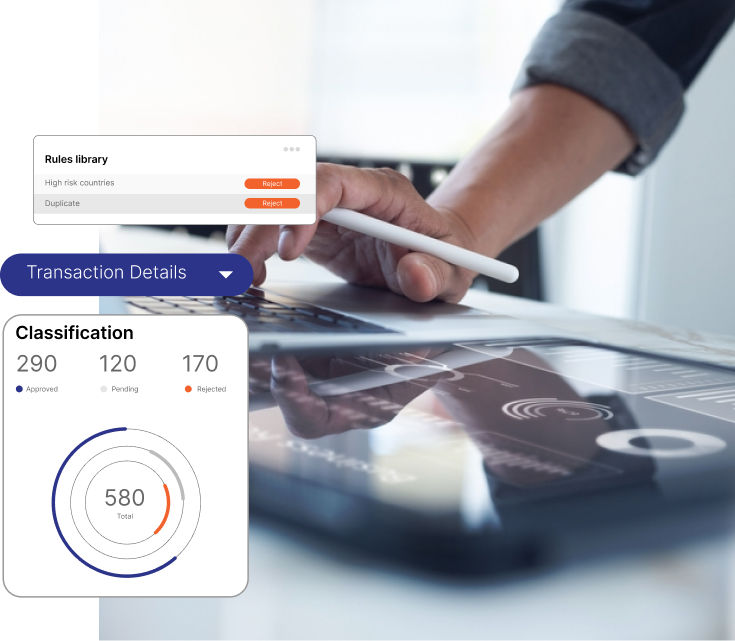
Reduce risk when onboarding customers
Go beyond watchlists and obtain the most up-to-date, accurate data sourced directly from regulatory and/or government authorities. Get adverse media updates 4 times a day to ensure you stay ahead of potential issues.

2. ComplyAdvantage: best for AI-driven adverse media screening at scale
ComplyAdvantage is one of the better-known technology-first providers in financial-crime risk intelligence.
Its adverse media product uses machine-learning models and structured entity information to help organisations identify relevant negative news while reducing the noise associated with traditional keyword searches.
According to ComplyAdvantage, its adverse-media coverage currently spans more than 11,000 verified national, regional, and local media sources across 200+ countries and territories. The company says its adverse-media data is updated daily.
Its platform also enriches results with contextual attributes that can help analysts distinguish genuine risk from unrelated matches.
Pros
Machine-learning-based adverse media screening
Structured entity profiles
Global and multilingual source coverage
Contextual information for match resolution
Ongoing monitoring
Strong API and risk-intelligence capabilities
Daily adverse-media data updates
Cons
Reviewers G2 point to false positives at higher alert volumes and gaps in case management once a hit needs investigating, so larger teams often outgrow the built-in workflow
Organisations may still require separate tools for parts of the broader KYC/KYB operating model
Enterprise implementations can require careful tuning to match the firm's risk appetite
Screens against its own database of profiles, which means coverage of a very new or very local adverse event can lag a human-curated provider like Dow Jones
Regional depth should be tested directly for the jurisdictions most important to your organisation
Who is ComplyAdvantage best for?
ComplyAdvantage is a strong fit for fintechs, financial institutions, and other organisations that want modern adverse-media and financial-crime risk intelligence with API connectivity and scalable monitoring.
Related content: ComplyAdvantage alternatives and competitors

3. LSEG World-Check: best for established enterprise risk intelligence
Considered one of the best AML software for accountants, LSEG World-Check is one of the most established names in financial-crime and third-party risk intelligence.
LSEG currently describes World-Check as containing structured risk records covering more than 5.8 million individuals and organisations. Its data supports names across more than 20 Latin-script languages and more than 40 non-Latin scripts.
This depth makes World-Check particularly relevant to large financial institutions and global organisations that need a recognised risk-data layer feeding an existing compliance infrastructure.
Its strength is the intelligence itself rather than acting as the firm's complete compliance operating system.
Pros
More than 5.8 million structured risk records
Extensive global coverage
Broad non-Latin script support
Established reputation in financial-crime risk intelligence
Suitable for onboarding, monitoring, and due diligence use cases
Strong fit for enterprise compliance stacks
Cons
Most valuable when connected to an established operational workflow
Enterprise deployment can be more complex than lightweight SaaS tools
Smaller organisations may not require its scale or breadth
It is intelligence, not software: a World-Check hit tells you a person is risky, but the investigation, the escalation, and the record of your decision all happen in another system
Pricing runs many multiples of entry-level screening tools, and getting full value assumes a compliance team mature enough to action curated data
Separate investigation and governance infrastructure may still be needed depending on deployment
Who is LSEG World-Check best for?
World-Check is best for large enterprises and financial institutions that already have mature compliance workflows and need a deep, globally recognised risk-intelligence source.
Read also: Alternatives to World-Check

4. Dow Jones Risk & Compliance: best for curated source quality
Also considered one of the best media screening software, Dow Jones Risk & Compliance is another established provider used by organisations that place a high value on curated financial-crime and reputational-risk intelligence.
Its appeal is particularly strong for teams that want structured risk information backed by a large international news and research ecosystem rather than relying solely on automated web collection.
For mature organisations, Dow Jones can provide a strong intelligence layer feeding existing screening and investigation workflows.
Pros
Strong reputation for curated risk intelligence
Broad international media coverage
Established brand and research infrastructure
Useful for firms prioritising precision and source quality
Suitable for mature enterprise screening environments
Cons
Primarily valuable as a risk-intelligence layer
A data feed, not a compliance platform: it delivers high-quality hits but leaves the investigation, decision, and audit trail to whatever system you connect it to
Premium, enterprise-tier pricing with no self-serve entry point, which puts it out of reach for smaller teams
Enterprise procurement and implementation may be heavier than simpler SaaS alternatives
Firms should evaluate local-language depth for their specific jurisdictions
Who is Dow Jones Risk & Compliance best for?
Dow Jones is best suited to larger organisations that already have compliance operations in place and want high-quality risk and negative-news intelligence feeding those systems.
Did you know Dow Jones is one of the best sanctions screening software?

5. LexisNexis: best for deep research and broad historical coverage
LexisNexis combines structured risk intelligence with a very large news and public-information ecosystem.
Its WorldCompliance data includes sanctions, PEPs, enforcement information, ownership-related data, and adverse-media profiles.
LexisNexis says its WorldCompliance dataset contains more than 8 million risk profiles across 250 countries and territories, supported by a global research operation monitoring dozens of languages. It's considered one of the best negative media screening software because its data draws from thousands of reputable news outlets.
That depth makes LexisNexis particularly useful for enhanced due diligence, complex investigations, and cases where historical context matters.
Pros
Extensive adverse-media and public-record coverage
Strong historical and investigative research capabilities
Structured WorldCompliance risk profiles
Global sanctions, PEP, enforcement, and adverse-media data
Useful for enhanced due diligence and complex cases
Continuously maintained risk intelligence
Cons
More comprehensive than many smaller firms need
Research-heavy workflows may require more analyst involvement than highly automated SaaS tools
Product architecture can be more complex than a single-purpose screening application
Reviewers consistently note it still surfaces a high volume of hits that need manual review, so the analyst workload is heavier than with a tightly filtered NLP tool
Built as a research and data platform, so like the other data providers it needs a separate system for workflow and audit trail
Enterprise pricing and expert-led configuration
Who is LexisNexis best for?
LexisNexis is particularly well suited to large enterprises, investigative teams, and compliance functions that need deep contextual research in addition to straightforward name screening.

6. Sumsub: best for adverse media inside digital onboarding
Sumsub is best known as a digital verification platform combining KYC, KYB, AML checks, and other onboarding capabilities.
For digital businesses, its main attraction is consolidation: adverse-media and AML screening can sit alongside customer or business verification rather than requiring a completely separate onboarding process.
This makes it one of the best AML software for fintechs, marketplaces, crypto businesses, and other digital-first companies that prioritise onboarding automation.
Pros
Adverse media integrated with broader verification workflows
KYC and KYB capabilities
Developer-focused integration options
Strong fit for digital onboarding
Broad international use cases
Reduces the need to combine multiple point solutions during onboarding
Cons
Adverse media is one component of a broader verification product
Firms requiring highly specialised investigative intelligence may still prefer a dedicated data provider
Governance and decision-trail requirements should be evaluated against the firm's specific operating model
Screening logic and data are tuned for global markets, with MENA and Arabic-language depth still developing
Who is Sumsub best for?
Sumsub is a good fit for digital businesses that want customer verification and AML screening inside a single onboarding flow.
You may be interested in: Alternatives to Sumsub

7. Shufti Pro: best for international customer verification and AML screening
Shufti Pro is considered a top media screening software because it combines identity verification with AML screening capabilities, especially designed for organisations serving customers across many markets.
Its broader proposition centres on helping firms verify identities and screen risk without stitching together separate systems for every onboarding step.
For companies serving an unusually diverse customer population, geographic and identity-verification breadth can be an important advantage.
Pros
Identity verification and AML screening in the same ecosystem
International deployment focus
Suitable for businesses with customers across many jurisdictions
Helps consolidate onboarding processes
API-led implementation options
Cons
Adverse media is one feature inside a wider identity and AML suite
Complex compliance-governance processes may require additional workflow capabilities
Firms should test regional names, transliterations, and local-language performance using their own customer data
A hit produces an alert, but there is no investigation workflow or decision audit trail wrapped around it
G2 reviewers note the name-matching logic can miss variants in some regional scripts, the same transliteration gap that affects its sanctions screening
A $2,500 one-time setup fee sits on top of the per-check price
Who is Shufti Pro best for?
Shufti Pro is best for organisations that prioritise international identity verification and AML screening and want those functions delivered through the same vendor ecosystem.
Read also: Best alternatives to Shufti Pro

8. Sigma360: best for complex risk and enhanced due diligence
Sigma360 is a top negative media screening solution designed for sophisticated risk and compliance teams that need more than flat name screening.
Its platform combines adverse media with entity resolution, KYB data, enhanced due diligence, persistent monitoring, and broader risk intelligence.
Sigma360 also applies AI to adverse-media investigation and summarisation, helping analysts consolidate related information and understand the context surrounding an entity rather than reviewing every article independently.
This makes it attractive where complex ownership structures, relationships, or high alert volumes create challenges that simpler screening systems cannot easily resolve.
Pros
AI-powered adverse media screening
Entity resolution capabilities
Persistent risk monitoring
KYB and enhanced due diligence capabilities
Useful for complex counterparties
Strong fit for sophisticated analyst teams
Cons
The network and EDD depth is more than a firm with straightforward customers needs, and that sophistication carries a heavier setup and a higher cost than a lean compliance function can justify
Aimed squarely at large, well-resourced risk teams, so a smaller team that just wants clean adverse media will get better value from a lighter tool
No self-serve trial, and onboarding assumes dedicated analyst resource
MENA-specific regulatory alignment is limited compared with a regional platform
Who is Sigma360 best for?
Sigma360 is best for large compliance and risk teams dealing with complex entities, enhanced due diligence, network risk, and significant screening volumes.
Related content: Best AML tools for law firms and lawyers
Which adverse media screening platform is best for your firm?
Firm profile | Best fit | Why |
GCC or MENA firm wanting adverse media inside a complete compliance programme | azakaw | Regional compliance focus plus onboarding, AML screening, monitoring, investigations, and audit trail |
Large institution with mature internal workflow needing established global risk data | LSEG World-Check or Dow Jones | Deep risk intelligence that can feed an existing compliance architecture |
Fintech wanting modern AI-driven adverse-media risk intelligence | Comply Advantage or azakaw | ML-based screening, structured profiles, APIs, and ongoing monitoring |
Digital business wanting AML checks alongside customer onboarding | Sumsub or azakaw | Verification and AML functions inside the same digital onboarding ecosystem |
International business focused heavily on identity verification | Shufti Pro | Broad IDV and AML proposition for cross-border customer bases |
Enterprise investigation team needing deep research | LexisNexis | Extensive adverse-media, enforcement, news, and public-record intelligence |
Complex risk team requiring entity resolution and EDD | Sigma360 or azakaw | Deeper entity intelligence, persistent monitoring, and AI-supported investigation |
Why azakaw is our top pick for a complete AML programme
azakaw is our top recommendation for firms that want adverse media screening to operate inside a complete, defensible AML programme, not as a standalone alert feed.
Its main advantage is that adverse media does not sit in isolation. Screening is connected to customer onboarding, KYB, AML checks, ongoing monitoring, investigations, transaction monitoring, governance workflows, and the audit trail.
That matters because the real compliance value of an adverse-media alert is not simply finding the article. It is being able to show what happened next.
With azakaw, teams can move from a screening hit to a documented compliance decision by:
confirming whether the article relates to the correct individual or entity
assessing the materiality of the information
investigating the underlying risk
escalating the case where appropriate
recording approval or dismissal decisions
documenting the rationale behind the outcome
retaining the full history for future reviews, auditors, or regulators
This is where azakaw differs most clearly from standalone risk-intelligence providers.
A data feed can surface the adverse media; azakaw is designed to help the compliance team act on it within the same operating environment.
For firms in the GCC and MENA, that proposition is particularly relevant. azakaw combines global screening capabilities with regional regulatory alignment and Arabic/English workflows, helping firms manage local compliance requirements without separating regional and international processes.
The results show up in how clients manage risk day-to-day. A leading asset management firm in DIFC, managing 150+ clients across 40 vendors and 20 employees, described the shift after implementing azakaw:
"azakaw has been a very useful visual tool for us. At any time, I can easily see all our stakeholders, clients, employees, vendors, and business partners and their associated risk levels."
The firm consolidated all compliance data, including screening results, onto a single dashboard its previous stack could never produce.
The result is a more connected compliance model: the adverse-media hit, customer profile, investigation, decision, and audit evidence remain part of the same record.
End-to-End Compliance Solution
Streamline compliance from identity, screening and business verification to corporate compliance and AML transaction monitoring, reducing costs and complexity so you can scale with confidence.
Frequently asked questions
What is adverse media screening?
Adverse media screening is the process of identifying negative or risk-relevant public information about an individual or organisation. If you want to master this topic, we highly recommend our guide "Adverse media screening".
What is the best adverse media screening software?
The best adverse media screening software depends on the compliance architecture you already have. azakaw is our top choice for firms that want adverse media embedded inside a wider AML programme with onboarding, monitoring, investigation, and governance workflows.
Is adverse media screening a regulatory requirement?
There is no single universal rule requiring every regulated organisation to apply the same adverse-media screening process to every customer. The expectation is generally a risk-based AML approach and depends on the applicable jurisdiction, customer profile, product, risk level, and due-diligence requirements.
What is the difference between adverse media and sanctions screening?
Sanctions screening compares a person or organisation against structured sanctions lists issued by governments and international bodies.
Adverse media screening is broader. It looks for potentially relevant negative information from media, regulatory, enforcement, court, and other public sources.
A person can therefore generate significant adverse-media risk without appearing on a sanctions list.
Why is language coverage important in adverse media screening?
Material risk is frequently reported in local-language sources before it appears in international English-language media.
A platform that does not handle the relevant language, writing system, spelling variants, or transliterations can therefore miss important information. This matters especially for organisations operating across multilingual jurisdictions or markets using non-Latin scripts.
How can firms reduce false positives in adverse media screening?
Start by using more than a customer's name. Strong screening programmes combine names with identifiers such as:
date of birth
nationality
location
company affiliation
aliases
beneficial ownership
photographs
relationships
other contextual data
Entity resolution, structured profiles, risk-specific NLP, and configurable matching thresholds can further reduce irrelevant results.
The most practical test is still to run the platform against a representative sample of your own customer population and measure how much analyst time is required to resolve the results.
Final verdict
The best adverse media screening software is not necessarily the platform with the largest number of articles or alerts.
The strongest solution is the one that helps your compliance team identify relevant risk, connect the information to the right person or entity, monitor that risk over time, and reach a documented decision efficiently.
For all the businesses that are looking for a solution that connects negative media screening to onboarding, AML monitoring, governance and auditing workflows, particularly across the GCC and MENA, azakaw is our top pick for 2026.
Want to test the best AML solution?
Onboard customers in seconds. Validate IDs, check for sanctions, PEP and adverse news, record Tax status, utilise investment risk profiles and create customised onboarding flows and use AI to assign risk ratings.
Related articles
Sources and methodology
AMLA guidance and 2026 consultation materials on ongoing monitoring
The Wolfsberg Group Negative News Screening FAQs
FATF risk-based approach guidance
Official vendor product documentation
Product documentation and public information available as of 2026
Third-party software review platforms where relevant
azakaw's product documentation and regulatory-alignment materials


