


What is adverse media screening?

Updated: 2 days ago
Adverse media screening is the process of checking whether a customer, applicant or business partner appears in publicly available negative news.
It forms part of customer due diligence (CDD) and enhanced due diligence (EDD) under most AML programmes.
Adverse media screening does not replace sanctions or PEP screening. It fills a different gap: it can surface allegations, investigations and reputational red flags that have not yet resulted in a listing on any official watchlist.
This guide sets out what counts as adverse media, why it matters, how the process typically works, and where the common challenges lie.
Adverse media screening - Key Takeaways |
|
|
|
|
|
|
|
What is adverse media screening?
Adverse media screening is the practice of searching public sources (news outlets, court records, regulatory announcements, and other reputable publications) for negative information about a customer or counterparty, and assessing whether that information indicates a financial crime or reputational risk.
In practice, this means running a name and often related identifiers, such as a date of birth or company registration number, against media sources and reviewing any results that come back.
A result on its own is not proof of wrongdoing. It is a signal that a compliance team needs to look more closely, understand the context, and decide whether it changes the customer's risk profile.
Adverse media screening is typically carried out at onboarding and repeated periodically as part of ongoing monitoring, with higher-risk customers reviewed more often.

What counts as adverse media?
Not every negative mention of a person or company is relevant to AML compliance. Most compliance teams organise adverse media into a small number of categories, and treat some as more serious than others.
Commonly used categories include:
Financial crime: money laundering, fraud, embezzlement, tax evasion.
Corruption and bribery: allegations or convictions involving public officials or corporate bribery.
Sanctions-related conduct: reported involvement in sanctions evasion or trade with sanctioned parties, distinct from an actual sanctions listing.
Terrorism and terrorist financing: reported links to terrorist organisations or their funding networks.
Serious violent or organised crime: where relevant to the customer's risk profile.
Regulatory and legal action: enforcement actions, licence revocations, court judgments.
For example, a supplier mentioned in a local news article about a fraud investigation is a different risk signal from a supplier named in passing in a business directory profile that also mentions an unrelated legal dispute from a decade ago.
Categorisation, recency and the credibility of the source all affect how a hit should be treated.
A plausible allegation from a national newspaper carries more weight than an unverified claim on a low-quality website.

Why does adverse media screening matter?
Adverse media screening matters because sanctions lists and PEP databases do not capture everything a compliance team needs to know.
Someone can be under active investigation for fraud, or named in credible reporting about a corruption scandal, long before, or even without, ever appearing on an official list.
For a compliance team, the practical value is early warning.
Adverse media can flag a problem at customer onboarding, before a relationship is established, or during ongoing monitoring, before a customer's changed circumstances turn into a suspicious activity report.
It also supports the wider due diligence picture: understanding a customer's background, business activities and associates in enough depth to apply the right level of scrutiny.
There is a reputational dimension too. A regulated business that onboards or continues to serve a customer widely reported to be involved in any type of financial crime, after credible information was available, is exposed to both regulatory criticism and reputational damage, independent of whether any law was technically broken.

Is adverse media screening a legal requirement?
Whether adverse media screening is a strict legal requirement depends on the jurisdiction, the type of regulated entity, and the specific wording of the applicable law.
It is not a single global rule, and organisations should not treat it as automatically identical everywhere.
At an international level, the Financial Action Task Force (FATF) sets standards for customer due diligence that inform how most countries structure their AML frameworks, including the expectation that firms understand the nature of a customer's business and assess risk on an ongoing basis.
FATF recommendations are not national law in themselves. Each country transposes them into its own legislation, and the resulting obligations, including whether adverse media screening is explicitly named or implied, vary accordingly.
The AML/CFT obligations in the UAE for licensed financial institutions sit within the federal legal framework and related Central Bank guidance, which draws on FATF standards. Other GCC jurisdictions have their own legislation and regulators.
Because the exact wording differs between countries, and sometimes between different regulators within the same country, organisations should confirm their specific obligations against the applicable law and their regulator's guidance, rather than assuming a requirement that applies elsewhere also applies to them.

How is adverse media screening different from PEP and sanctions screening?
Adverse media, PEP and sanctions screening are related but distinct controls, and treating them as interchangeable is a common source of gaps in a compliance programme.
Screening type | What it checks | Typical data source | When it typically applies |
Sanctions screening | Whether a customer appears on an official sanctions list | Government and international sanctions lists (e.g. UN, OFAC, EU, national lists) | Mandatory for virtually all regulated entities, before onboarding and on an ongoing basis |
PEP screening | Whether a customer is, or is closely associated with, a politically exposed person | PEP databases, government position registers | Required as part of CDD/EDD frameworks; triggers enhanced due diligence |
Adverse media screening | Whether public reporting links a customer to financial crime or serious misconduct | News media, court records, regulatory announcements | Common practice as part of CDD/EDD and ongoing monitoring; scope of legal requirement varies by jurisdiction |
Adverse media vs sanctions screening
Sanctions screening checks a fixed, official list. A match is a clear, largely binary event that usually triggers an immediate compliance response.
Adverse media screening works with unstructured, evolving public information, and a match requires human judgement to assess relevance, credibility and materiality. It is rarely as clear-cut as a sanctions hit.
Adverse media vs PEP screening
PEP screening identifies a status: someone holds or has held a prominent public function, or is closely associated with someone who does.
Adverse media screening identifies conduct, specific reported allegations or findings.
A PEP with no adverse media is still subject to enhanced due diligence purely because of their status; a non-PEP customer with serious adverse media may also require enhanced scrutiny because of what has been reported about them.
Related content: What are the best tools for PEP screening?
How does the adverse media screening process work?
The following reflects a typical workflow used by many compliance teams, illustrated here as an example rather than a fixed regulatory requirement:
Search and data gathering. Run the customer's name and, where available, other identifiers, against media and public record sources.
Filtering and relevance review. Remove clearly irrelevant results (name mismatches, unrelated individuals) and assess which remaining hits could plausibly relate to the customer.
Risk assessment and categorisation. For genuine hits, assess the category of adverse media, the credibility of the source, how recent the reporting is, and whether the allegation is proven, ongoing or historic.
Decision and documentation. Decide whether the finding changes the customer's risk rating, requires enhanced due diligence, or warrants escalation and record the reasoning for audit purposes.
This process typically runs at onboarding and is repeated periodically, more frequently for higher-risk customers as part of ongoing monitoring.
What are common challenges in adverse media screening?
The main operational challenge in adverse media screening is separating genuine risk signals from noise, at a volume that manual review struggles to keep up with.
False positives: Common names, unrelated individuals sharing a name, and historic or resolved matters can all generate hits that require review but ultimately carry little risk.
Unstructured data: Unlike a sanctions list, news content is not standardised, which makes automated relevance and credibility assessment genuinely difficult.
Source quality and language coverage: Not all media sources are equally reliable, and screening that only covers English-language sources can miss relevant reporting in a customer's home market.
Alert fatigue: High volumes of low-relevance hits can lead reviewers to move through alerts too quickly, increasing the risk of missing a genuine finding.
Keeping pace with ongoing monitoring: Re-screening an entire customer base regularly, rather than only at onboarding, is resource-intensive without some degree of automation.

Where does technology help with adverse media screening?
Technology can help by automating the search, filtering and categorisation stages of adverse media screening, so reviewers spend their time on the hits that actually need judgement.
In practice, this typically covers:
Automated searching across news and public record sources, run consistently at onboarding and on a set review cycle.
Initial filtering to remove obvious name mismatches and clearly irrelevant hits before they reach a reviewer.
Consistent categorisation of genuine hits (e.g. financial crime, corruption, sanctions-related conduct), reducing variation between reviewers.
Prioritisation of the hits most likely to be relevant, so reviewer time is spent on the cases that need judgement.
Audit-ready documentation of what was screened, when, and how each hit was assessed.
This does not remove the need for human review. Adverse media assessment involves context and judgement that automated systems support rather than fully replace, particularly for borderline or ambiguous cases.
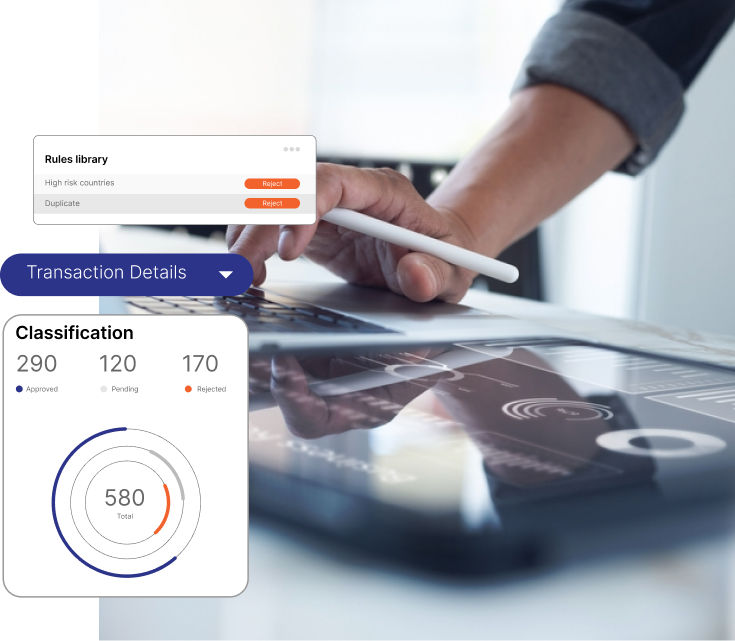
Negative Media Screening
Obtain the most up-to-date, accurate data sourced directly from regulatory and government authorities. Get adverse media updates 4 times a day to ensure you stay ahead of potential issues.
FAQs
What is the difference between adverse media and negative news?
In practice, the two terms are used interchangeably in AML compliance: "adverse media" and "negative news" both refer to publicly reported negative information used in due diligence.
Is adverse media screening required by law?
It depends on the jurisdiction and the type of regulated entity.
How often should adverse media screening be repeated?
Most AML compliance programmes screen at onboarding and then periodically as part of ongoing monitoring, with higher-risk customers reviewed more frequently than lower-risk ones, in line with a risk-based approach.
What sources are used for adverse media screening?
Typical sources include news media, court and litigation records, regulatory enforcement announcements, and other publicly available reporting. Coverage and quality vary significantly between screening providers.
Can adverse media screening be automated?
Yes, to a significant extent, automation can handle initial searching, filtering and categorisation, but human review typically remains necessary to assess relevance, credibility and materiality for genuine hits.
Getting adverse media screening right
Adverse media screening works best as one part of a wider due diligence picture, not a standalone check. A hit is a starting point for judgement, not a verdict, and a clean result does not mean a customer is risk-free, only that nothing relevant has surfaced yet.
For most compliance teams, the practical priorities are the same regardless of jurisdiction or industry: define clearly which categories of adverse media matter to the business, apply a risk-based frequency for onboarding and ongoing monitoring, document how each hit was assessed, and use automation where it genuinely reduces manual noise without removing human judgement from the final call.
End-to-End AML Compliance Tool
azakaw is an AI-powered AML compliance software that provides screening capabilities that extend to adverse media and negative news screening alongside sanctions and PEP screening. Safeguard your business from potential issues.
Adverse Media Screening Video Summary
Related articles:
Sources referenced
FATF customer due diligence standards
UAE Federal Decree-Law No. 20 of 2018 on AML/CFT and Cabinet Decision No. 10 of 2019
Central Bank of the UAE AML/CFT guidance


