


Anti-Money Laundering Certificate: Is it worth it, and how long does it last?

Updated: Apr 5
If you work in the field of finance, real estate, law, or any area subject to strict regulations, then the term "anti-money laundering certificate" has likely been mentioned to you.
Having an anti-money laundering certificate shows that you understand how money laundering schemes operate, how to identify them, and what action to take if you suspect suspicious activities.
This blog post will walk you through what an anti-money laundering certificate is, who needs it, how to get one, its cost, and which certifications strengthen your profile in countries such as the UAE, Singapore, the EU, and the US.
AML Certificate - Key Takeaways |
|
|
|
|
|
|
|
|
|
What is an Anti-money laundering certificate?
An anti-money laundering certificate is a professional credential that proves you have completed Anti-Money Laundering (AML) training and know how to identify, prevent, and report financial crimes.
It covers money laundering principles and advanced techniques used in current AML Compliance Programs.
Who needs it and why?
Anyone involved in financial transactions requires a valid AML certificate, including:
Bank employees
Compliance officers
Mortgage brokers
Lawyers
Accountants
Cryptocurrency platform staff
Estate agents
If your profession falls under AML laws, you need evidence that you and your staff are equipped to handle their responsibilities.
Regulatory bodies require trained personnel to enforce their policies.
AML compliance officers must obtain Anti-Money Laundering certificates. They need to understand:
How to file a Suspicious Activity Report (SAR) or Suspicious Transaction Report (STR)

Legal and regulatory background
The Financial Action Task Force (FATF) leads the global framework for combating money laundering. The FATF Recommendations provide international standards that inform national laws, including the EU's Anti-Money Laundering Directives, the UAE's Federal Anti-Money Laundering Law, and the US Bank Secrecy Act.
These frameworks require all regulated businesses to adopt a risk-based approach: identifying high-risk areas and establishing internal control systems to manage them.
AML training is mandatory under various laws, and several countries require specific AML certifications for positions such as Chief Compliance Officer.
What are the types of AML Certificates available?
Anti-Money Laundering (AML) certifications generally fall into three categories:
Basic Awareness certificates for front-line staff,
Job-specific professional certifications (such as ACAMS or ICA) for compliance officers,
Region-specific credentials tailored to local regulations like those in the UAE, UK, or Singapore.
While basic courses cover common money laundering methods and KYC, advanced certifications focus on risk-based methodologies, SAR filings, and building comprehensive AML programs.
Basic awareness certificates
These AML awareness courses are designed for front-line staff who want to understand what money laundering is, what it involves, and how to identify suspicious transactions.
The course covers the three money laundering stages along with simplified Know Your Customer (KYC) and Customer Due Diligence (CDD) procedures.
You can complete your Anti Money Laundering certificate online in a few hours. Basic AML training courses help you equip new joiners with the necessary knowledge or meet your yearly training requirements.
However, these courses provide limited information for AML Compliance professionals. But they contribute towards fighting financial crimes for tellers, the customer care team, and the administrative department!
Job-specific certifications
Those working directly in areas such as compliance, risk, or financial crime roles need to hold an advanced AML certification.
Training programs such as:
ACAMS: The Association of Certified Anti-Money Laundering Specialists provides the CAMS qualification, a global benchmark for AML specialists.
ICA: The International Compliance Association provides AML qualifications for bankers, lawyers, and estate agents, providing detailed AML compliance training, including Risk-Based Approach Methodology, SAR Filings, and Building AML Programmes.
The End-to-End Compliance Tool
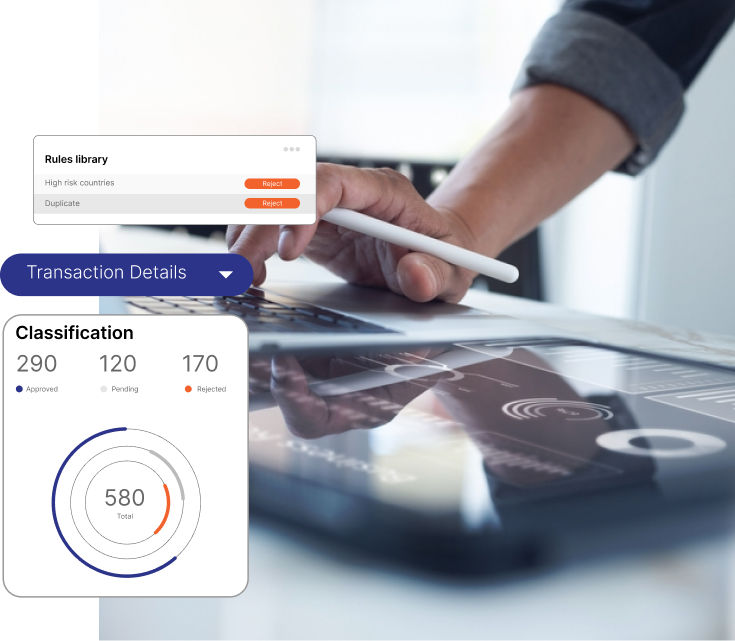
Oversee and manage compliance for every region from a single interface, with azakaw’s multitenancy model ensuring you maintain control regardless of your operating locations.
Region-specific certificates
Certain countries require or recommend certified credentials.
In the UAE, the Financial Intelligence Unit (FIU) and the Central Bank of the UAE set the standards. Several AML training providers - local and international - now offer AML training focusing on the UAE Financial System, which covers STR obligations and FATF-aligned Risk Frameworks.
Singapore's Monetary Authority (MAS) also requires employees in regulated institutions to possess AML/ CFT skills. To keep pace with regional laws and regulations, our AML training courses equip you with knowledge of local laws.
In the UK, ICA and ACAMS have good reputations. The European Union's Money Laundering Directives (AMLD) give details about the skills needed by compliance teams, and training programs offering EU standards provide relevant information.
Read also: UAE AML Compliance regulations
Obtaining an Anti-Money Laundering Certificate
Acquiring an AML certification is easier than you think. All you need to do is choose a suitable course corresponding to your career goal and follow it through.
How to obtain a money laundering certificate
Start by identifying the certification required: If you are new to the field of financial compliance, start with foundational Anti-Money Laundering training. If you want to take up a senior AML role, consider going for CAMS certification or ICA Diploma Level Courses.
Choose a reliable training provider: Look out for programs accredited by ACAMS, ICA, or any other reputable national body operating in your geographical location. Some companies provide a training budget to their employees; we always suggest verifying the training calendar of your organisation before opting for self-funded training.
Complete the training curriculum and clear the examination: The majority of AML training courses include a combination of lessons, case studies, and a final examination. For example, ACAMS requires clearing a proctored examination.
Maintain your certification: Most AML certificates require Continuing Professional Development (CPD) or renewals to keep the certification active.
Online vs. In-person options
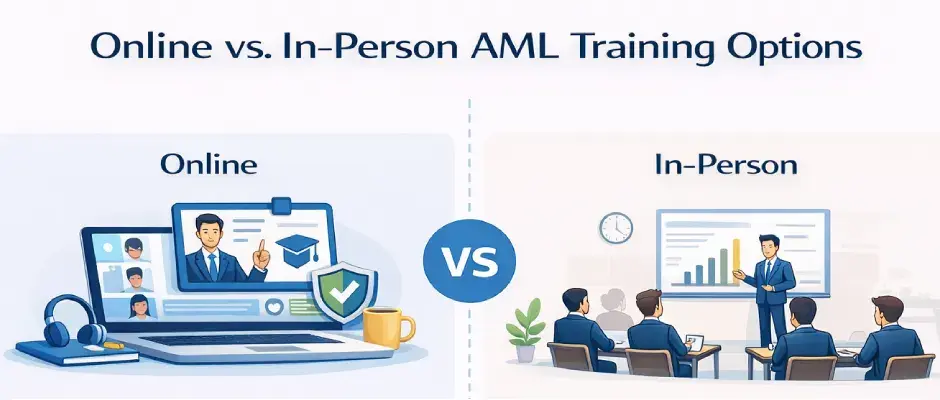
Most AML training courses are now available online, which makes them much more accessible. You can complete an anti-money laundering certificate online at your own pace, which works well for busy professionals.
However, AML training courses held in person have their benefits. They provide opportunities to meet the trainers, participate in group discussions, and enjoy a well-organised study environment.
Certain companies operating in regulated economies, such as the UAE or Singapore, may look out for candidates holding in-person certifications from established local training institutions.
For the CAMS examination, training can be obtained through online means of study; however, the examination has to be given at a registered assessment centre or via online monitoring.
Cost, duration, and validity
Before you commit to an AML training program, it's worth understanding what you're getting into financially and time-wise. Costs and timeframes vary a lot depending on the certification level.
How much does an AML certification typically cost?
The cost of an AML certificate depends on the level of expertise:
A basic AML course can cost $50 to $200.
Mid-level anti-money laundering certification courses typically range from $300 to $1,000.
Advanced courses range from $1,000 to $3,000.
The CAMS certification costs around $1,795 for ACAMS members, which includes study materials and one exam attempt.
ICA programs in the UK and UAE range from approximately £800 to £2,500, depending on the qualification level.
Level | Estimated Cost (USD) | Best For |
Basic | $50 – $200 | Front-line staff |
Mid-level | $300 – $1,000 | Compliance Officers |
Advanced | $1,000 – $3,000+ | AML Specialists (CAMS/ICA) |
Related article: The best AML & KYC certifications

How long does it take to complete an AML certificate?
It depends on the level: it can take as little as 2 hours for basic courses or up to 200 hours for advanced certifications.
A basic AML awareness certificate can be completed in 2 to 4 hours. An intermediate anti-money laundering course might take 1 to 3 days.
The CAMS certification requires about 200 hours of study on average before candidates sit the exam. ICA diploma programs typically run over several months with a mix of self-study and assessments.
How often should AML certification be renewed?
The CAMS certification requires renewal every three years. Renewal involves earning continuing education credits, 60 credits over the three years.
The ICA also has similar CPD requirements. Basic awareness certificates may need annual renewal depending on your employer's policy or regulatory expectations.
In heavily regulated sectors like banking in the UAE or Singapore, annual AML money laundering training is often expected regardless of certification status.

FAQs about the Money laundering certificate
Is AML certification worth it?
Yes, Anti-Money Laundering (AML) certification is generally worth it for professionals seeking career advancement, higher salary potential, and enhanced credibility in compliance and risk management. It serves as a recognized standard, especially for roles like AML Analysts or Compliance Officers, demonstrating competence in combating financial crime.
Is AML certification mandatory for all financial institutions?
Not universally, but AML training is legally required in most regulated markets.
Specific certifications may be expected for senior compliance roles. In the UAE, UK, EU, and Singapore, regulated firms must demonstrate that their staff have received adequate anti-money laundering compliance training. Certification is the most clear way to show this is true.
What's the difference between an AML certificate and AML training?
AML training itself is the process: the courses, modules, and learning involved.
An AML certificate is the actual formal credential you will have when you finish and pass that training.
Training without certification may meet your company's internal requirements, but certification carries much more weight with regulators and prospective employers in the compliance industry.
Can I get an AML certificate online?
Yes, you can absolutely get an AML certificate online. Even ACAMS (CAMS) and ICA have fully transitioned to digital-first models
Are AML certificates valid internationally?
The CAMS certification is recognized all over the world and has significant worth in the US, EU, UAE, Singapore, and other countries beyond.
ICA qualifications are also widely accepted, especially in the UK and the Middle East. That said, some markets have their own preferred certifications, so check out what your local regulators and employers specifically require.
Which organizations offer recognized AML certifications?
The most globally recognized AML certifications are offered by ACAMS (CAMS), the International Compliance Association (ICA), and the Association of Certified Financial Crime Specialists (CFCS). In the UAE, the Central Bank of the UAE (CBUAE) also approves local training providers for region-specific compliance.
Does the UAE or Singapore require specific AML certification?
Yes, both the UAE and Singapore have specific regulatory requirements for AML training, though they prioritize competence over a single brand of certificate.
In the UAE: The Central Bank of the UAE (CBUAE) and the Ministry of Economy require compliance officers to demonstrate "appropriate expertise." While not mandatory by name, certifications from the Emirates Institute of Finance (EIF) or global standards like ACAMS (CAMS) are highly favored by local regulators to meet Federal Decree-Law No. 20 requirements.
In Singapore: The Monetary Authority of Singapore (MAS) expects professionals to meet IBF Standards. The "gold standard" is the CAMS + Singapore AML Regime certificate, which is IBF-accredited and specifically covers MAS Notice 626.
Is there a difference between AML and KYC certification?
Yes, there is a difference between them.
KYC (Know Your Customer) certification will focus exclusively on the verification of identities and onboarding processes.
An AML certification is much broader; it includes KYC as just one part, along with CDD, EDD, SAR filings, risk assessments, and AML program management itself. Most AML certifications will have KYC within their curriculum anyway.
Related content: Know Your Customer policy in banking
What level of AML certificate do compliance officers really need?
An AML compliance officer must hold a professional-level certification like CAMS or an ICA diploma. Since compliance officers are responsible for designing and overseeing the entire AML compliance program themselves, they need credentials showing they really know their stuff.
What happens to an organization if it doesn't meet AML training requirements?
The regulators can impose fines, suspend your licence, and even, in extreme cases, prosecute individuals under criminal law.
In the UAE, the EU, and Singapore, penalties for failing to comply with AML can actually amount to millions. Beyond the fines themselves, a serious blow to your reputation may be really hard to recover from compared to any actual financial penalty itself.
Conclusion
Obtaining an anti-money laundering certification isn't just about marking the box for your regulator. It is building knowledge that protects your organization and your career.
If you're starting with a fundamental AML course or are on your way to getting a full CAMS qualification, choosing the right anti-money laundering certification course will be one step ahead of the risk and one step ahead of the competitors.
The markets such as the UAE, Singapore, the EU, and the US are all imposing even higher requirements around AML compliance training.
The specialists and companies that take this extremely seriously right now will be positioned much better when the next round of regulatory supervision arrives. Begin your career with the right AML training program and start from there.
Related articles


