


How to investigate an AML alert: a step-by-step process from triage to STR decision

Your alert queue is full again. Every alert is a flag raised by a rule, not evidence of wrongdoing, and you need to decide which ones need attention now and be able to explain every decision later.
The clock matters too. Central Bank of the UAE (CBUAE) guidance gives licensed financial institutions a maximum of 35 business days from alert generation to file a Suspicious Transaction Report (STR), while the law itself requires reporting without delay.
This guide teaches you how to investigate an AML alert from triage to the STR decision. It covers UAE and Saudi expectations, a worked example and a short comparison with the US and the UK.
How to investigate an AML alert - key takeaways |
|
|
|
|
|
|
|
What is an AML alert?
An AML (Anti-Money Laundering) alert is an automated signal generated by a financial institution's compliance or transaction monitoring system when a customer's behaviour or transaction deviates from expected patterns or crosses a risk threshold
An analogy: an AML alert is a flag that some activity does not fit what you know about the customer. It can come from a monitoring system, a screening tool or a referral, and it tells you to look closer.
It is not evidence of illicit activity. Your task is to review it and decide whether there are reasonable grounds to suspect money laundering or another crime.
Alert, case and suspicion: three different things
An alert is a flag showing that a monitoring rule, model or referral has triggered.
A case is the file opened when an alert needs investigation beyond the initial review. One case can hold several alerts on the same customer.
A suspicion exists when there are reasonable grounds to believe that funds or transactions are linked to criminal activity.
Only a suspicion triggers a report. An AML red flag on its own is not proof.
Where alerts come from
CBUAE guidance treats automated monitoring alerts, employee referrals and law enforcement requests as alerts. Screening hits sit alongside them, and each source needs a different first question.
Transaction monitoring: which rule fired, and on what data?
Screening: is the name match real?
Staff referral: what did the employee see or hear?
Authority request: what is being asked, and by when?
Read also: What is transaction monitoring in AML?

How do you investigate an AML alert?
Start by understanding why the alert fired. Then review the customer's profile and activity, request more information if needed, make a decision and record your reasoning.
The steps below are an example workflow, not a mandatory procedure. Neither UAE nor Saudi law prescribes them, and terms such as Level 1 and Level 2 describe how teams organise the work, not separate legal requirements.
Identify why the alert fired.
Check for duplicate and previous alerts on the customer.
Review the customer's KYC data, risk profile and expected activity.
Analyse the alerted transactions against the account history.
Identify the parties involved and map the flow of funds.
Run screening and adverse media checks.
Request information or documents where needed.
Decide whether to close, escalate or recommend a report.
Record the reasons for your decision.
Close or escalate with the required managerial approval.
Update the customer's risk rating and continue monitoring.
The six steps below follow this order.

Reduce AML False Alerts
Leverage AI to monitor transactions and flag suspicious activities instantly. Enhance risk scores dynamically by analysing behavioural patterns, ensuring accurate identification of subjective elements powered by an AI-powered AML tool
Step 1: Triage the alert
Triage tells you what triggered the alert, how urgent it is and whether it has already been dealt with. Done well, it keeps the queue moving and makes sure the highest-risk alerts are reviewed first.
Understand why the alert fired
Study the rule, the threshold and the transactions behind the alert. If you cannot explain why it was generated, you cannot judge whether it is right.
Note the alert generation date. Under CBUAE guidance, the filing timeline runs from that date.
Check prior alerts, open cases and duplicates
Look for earlier alerts, linked accounts and open cases connected to the flagged activity. If the alerts form a pattern, open a case.
Do not close a repeat alert without understanding why the previous one was closed.
Prioritise by risk
CBUAE guidance expects alerts to be prioritised by risk, so high-risk customers come first. Any suspected terrorist financing should go to the Money Laundering Reporting Officer (MLRO) straight away.
Read also: AML false positives reduction
Step 2: Review the customer profile
Before judging the transaction, check whether it fits the customer's business, purpose, expected activity and risk rating.
Activity that looks unusual in isolation can be normal for a particular customer. The reverse is also true: activity that looks routine can become suspicious once you see the whole profile.
CDD, risk rating and expected activity
Retrieve the customer due diligence (CDD) file and review the business, the ownership and, where available, the source of funds and source of wealth. Compare the expected volumes, countries and counterparties with what you now see.
Note the risk rating and when the profile was last updated. For high-risk customers, review the enhanced due diligence (EDD) file as well.
Related content: AML customer risk rating
What has changed since onboarding
Look for changes in ownership, products or countries, new adverse media, and dormant accounts that suddenly become active. An outdated profile can make normal activity look suspicious.
Sometimes the right outcome of an alert is a CDD refresh rather than an escalation.

Reduce AML False Alerts
Transform end-to-end onboarding with customised flows tailored to your business needs using our secure solution. Verify entities and map UBOs across jurisdictions.
Step 3: Analyse the activity
Test the alerted transactions against the customer's history, profile and counterparties. Work out which parts of the alert you can support with evidence, and investigate any gaps.
The alerted transactions in the context of the account history
Set a review period, often called a look-back period, in line with your risk policy. Compare the amount, frequency and timing of the alerted activity with the customer's usual pattern.
CBUAE guidance gives extending a review from 30 to 90 days as an example. Whatever period you choose, record why.
Counterparties and the flow of funds
Identify who sent the funds, who received them and how each party relates to the customer. Then follow the money.
How long did the funds stay in the account before moving on?
Do any counterparties share addresses, directors or devices?
Does the flow of funds match the customer's stated business?
Screening, adverse media and open-source checks
Screen the customer and key counterparties, and run adverse media and open-source checks, including company registers. Record the date and result of each check.
A note of caution: sanctions screening alerts follow a different process. A confirmed match triggers targeted financial sanctions obligations, which are outside the scope of this guide, so follow your sanctions procedures.

Scale with Confidence
Screen transactions and entities against over 1,400 global sanctions, Politically Exposed Persons (PEPs), and adverse media watchlists with the most advanced Integrated sanctions screening tool.
Step 4: Ask for more information without tipping off
You can ask the customer for information during an investigation, as long as you use the language you would use in normal business. Never say that you're investigating an AML alert.
FATF Recommendation 21 sets the international standard on tipping off and confidentiality.
In the UAE, Federal Decree-Law No. 10 of 2025 and Cabinet Resolution No. 134 of 2025 prohibit disclosing that a report has been or will be filed, or that an investigation is under way.
Tipping-off rules apply while you investigate, not only after you file. Compare these two requests:
Safe: "As part of our regular review, please send us the invoices for March's transactions."
Unsafe: "We have identified suspicious transactions and are investigating your account."
A few habits keep you safe:
Route requests through the relationship manager and tie them to the regular review cycle.
Set a deadline for the reply and do not leave the case open indefinitely. CBUAE guidance says unanswered requests should not delay a required report.
If further questions could alert the customer, stop asking and consider filing. Both UAE law and the SAMA Guide allow for this.
Step 5: Decide whether to close, escalate or report
Every alert ends in one of three outcomes: close it, escalate it or recommend a report.
Close when the file explains the activity, escalate when it does not, and recommend a report when there are reasonable grounds to suspect.
The filing decision belongs to the Compliance Officer or MLRO. Under FATF Recommendation 20, suspicions must be reported to the Financial Intelligence Unit (FIU) promptly.
Alert outcomes and what the file must show
Outcome | When it applies | What the file must show | Next step |
Closed as false positive | The rule fired, but the activity clearly fits the profile | Why it fired, the profile check, the explaining fact | Close and feed back to rule tuning |
Closed with a documented explanation | Unusual, but documents or history explain it | Explanation, evidence, checks and reasoning | Close and update expected activity |
Escalated for case investigation | The explanation is incomplete | Findings, open questions, requests made | An investigator takes the case |
Expedited escalation to the MLRO | The facts may already warrant a report, or activity is ongoing | Facts, reason for urgency, timestamps | The MLRO decides; CBUAE guidance expects a decision within 24 hours |
STR or SAR filed | The MLRO finds reasonable grounds to suspect | Rationale, narrative, documents, approval, reference | File with the FIU and apply post-filing steps |
Level 1 and Level 2 are industry terms. CBUAE guidance describes quality control before an alert is finally closed, but how you structure it is a matter of internal policy.
Who decides what
Role | What they decide | What they must not decide alone |
Alert reviewer (Level 1) | Close the file, or open a case | Anything beyond a clear false positive or explanation, or whether to file |
Investigator (Level 2) | What to request, and whether to recommend closing or filing | The final filing decision |
Quality control | Whether the file meets the standard | Filing; QC sends weak files back |
Compliance Officer or MLRO | Whether to notify the FIU or retain the matter, with reasons | Leaving a decision undocumented, or waiting on slow customer replies |
Step 6: Document the decision
Your file should show not only what you decided, but how you reached the decision.
Use this AML alert investigation checklist:
The alert details and the trigger
The review period and why you chose it
The customer information available at the time
The transactions examined
Counterparties and the flow of funds
External sources consulted, with dates
Communication with the customer and their replies
Your findings
The decision and the reasons for it
The reviewer and approver, with dates
Compare these two closure notes. Both are illustrative.
Weak closure note
Customer explained the deposit. Looks fine. Closed.
Good closure note
Alert fired on a cash deposit above the customer's usual range. Customer is a retail shop. Reviewed 90 days of history and last year's seasonal peak. Deposit matches the sales ledger on file. Screening and adverse media clear. No reasonable grounds to suspect. Closed. Reviewer and approver named.
The weak note says what happened. The good note shows how you know, which is the whole point of an AML alert closure note.
Read also: Suspicious transaction reports

AML alert investigation example
The example below is fictional. A UAE free zone trading company receives round-amount payments from unrelated third parties and sends most of the money abroad within two days.
The same alert can end in two ways: closed with a documented rationale, or escalated to the MLRO. The difference lies in what the investigation finds.
The alert
A pass-through rule fires on Meridian Gulf Trading FZE, a trader in electronic components. In six days, it received five payments of AED 200,000 from five different companies and, within two days, sent AED 950,000 to a foreign supplier.
There are no previous alerts. The profile expects multiple suppliers and payments from Asia, but the speed of the outgoing transfer stands out.
Ending A: closed with a documented rationale
Routine requests produce invoices and shipping documents for every payment. Each payer is a registered reseller, and the amounts match delivery milestones in the purchase orders.
The supplier's commercial invoice and bill of lading match the goods, and previous quarters show the same pattern.
Closure note
Pass-through alert on five AED 200,000 credits and one AED 950,000 transfer. Invoices, purchase orders and shipping documents support every flow. Payer licences verified. Pattern matches 12-month history. Screening and adverse media clear. No reasonable grounds to suspect. Closed. Expected activity updated.
Ending B: escalated to the MLRO
In this version, the follow-up requests uncover a different picture.
Four of the five payers are registered at the same address abroad.
The invoices describe industrial machinery parts, not electronic components.
The shipping documents show nothing was dispatched before the money left.
The supplier was incorporated recently.
The customer's replies do not explain any of these points.
Recommendation to the MLRO
Activity is inconsistent with the declared business. Four payers share an address. Invoiced goods do not match the business model. No shipment evidence precedes the transfer. The replies do not close these gaps. These facts are not proof of wrongdoing, but in my view they give reasonable grounds to suspect. A transaction is involved, so this would be an STR. I recommend filing.
The MLRO makes the final decision, and the reasons are documented, whatever the outcome.

How long do you have to investigate an AML alert?
It depends on the regulator and jurisdiction.
In the UAE, suspicious transactions must be reported to the FIU without delay. For CBUAE-licensed financial institutions, CBUAE guidance sets a maximum of 35 business days from alert generation, while still expecting filing as soon as possible.
Saudi Arabia, the US and the UK set their own rules. FATF standards, assessed in the Gulf through MENAFATF, are recommendations rather than domestic law, so always check your own regulator's requirements.
UAE: "without delay" in law, and the CBUAE timelines
Federal Decree-Law No. 10 of 2025 requires financial institutions, DNFBPs and VASPs to report suspicious transactions to the FIU without delay, through goAML and regardless of value. Cabinet Resolution No. 134 of 2025 repeats the requirement to report immediately. Once the decision to report is made, the filing is where time is lost. Here is how to automate the goAML reporting step.
The 35 business days are a ceiling, not a window. "Without delay" is the legal standard.
The CBUAE Guidance for Licensed Financial Institutions on Suspicious Transaction Reporting turns that standard into timelines. Where identifying the suspicion took longer than expected, the STR should explain why.
The guidance was issued in 2021, before the 2025 Decree-Law, and applies to CBUAE-licensed financial institutions. It does not cover DNFBPs or firms supervised by the DFSA, FSRA, SCA or VARA unless their own supervisor adopts it.
CBUAE timelines for licensed financial institutions
Scenario | CBUAE expectation | Note |
Legal standard | Report to the FIU without delay | Federal Decree-Law No. 10 of 2025; any value |
Standard alert to filing | Maximum 35 business days from automated alert generation | Outer limit; file ahead of it |
Expedited review | MLRO decides within 24 hours of escalation, then files within 24 hours of the decision | For activity needing immediate attention |
Complex investigation | Initial report within 15 business days of the alert; follow-up within 30 business days of the initial filing | Label the first report "complex investigation" |
Continuing activity | Enhanced monitoring after filing; file again promptly if suspicious activity continues | No fixed day count |
Check whether your supervisor sets its own timelines, and track the age of every alert from the date it was generated.
Read more about AML Compliance UAE

Multi-Jurisdiction AML, Zero Missed Timelines
Navigating conflicting reporting windows across the UAE, KSA, US, and UK puts your license at risk. azakaw automatically maps alerts to each regulator’s exact requirements—handling expedited reviews, complex investigations, and immediate filings effortlessly.
Saudi Arabia: the AML Law and the SAMA AML/CTF Guide
The Saudi framework rests on the Anti-Money Laundering Law (Royal Decree No. M/20), its Implementing Regulations and the SAMA AML/CTF Guide.
Suspicious transactions are reported to the Saudi Financial Intelligence Unit (SAFIU).
Section 8 of the SAMA Guide covers internal investigation. Where an internal report is not escalated to SAFIU, the reasons must be recorded in detail, and firms should keep a record of cases investigated but not reported.
Section 6 requires records of transactions, reports and decisions not to report to be kept for at least ten years from the report or the decision not to report.
Saudi rules have been updated recently, so check the current Implementing Regulations for deadlines.
Related content: SAMA Compliance
The US and the UK in brief
In the US, banks must file a Suspicious Activity Report (SAR) with FinCEN within 30 calendar days of initial detection. Where no suspect has been identified, filing may be delayed by a further 30 days, to a maximum of 60.
In the UK, the Proceeds of Crime Act 2002 requires disclosure to the National Crime Agency as soon as practicable. Neither regime applies in the UAE or Saudi Arabia.
Fully Compliant Everywhere
Learn how azakaw makes MLRO life easier with an AI-powered AML solution that uses regulator-specific templates or allows you to create your own rules and workflows.
What happens after an STR or SAR is filed?
Filing is not the end of the case.
CBUAE guidance expects you to review the customer's risk rating, consider enhanced due diligence, review linked accounts and transactions, and decide whether to keep the relationship.
Tipping-off rules continue to apply throughout.
Risk rating: reassess the customer's rating. A filed STR will usually justify a higher one.
Enhanced monitoring: watch the account closely and file again promptly if suspicious activity continues.
Linked accounts and parties: review every account and party connected to the reported activity.
Keep or exit the relationship: the Compliance Officer or MLRO decides, and records why.
FIU requests: answer follow-up requests received through goAML promptly.
You may be interested in: SAR and STR difference
What are the most common mistakes in alert investigations?
The same mistakes appear across teams. Most are habits rather than gaps in knowledge.
Accepting the customer's explanation without evidence
Copying a previous closure rationale that no longer reflects the facts
Reviewing the alerted transaction without the account history
Ignoring previous alerts on the same customer
Waiting for customer replies past the deadline
Filing defensive reports, which CBUAE guidance discourages
Tipping off the customer with poorly worded questions
How to make AML alert investigations faster and more consistent
Speed comes from consistency, not shortcuts. A clear process, risk-based prioritisation and second-level review let analysts close simple alerts quickly and spend their time on complex ones.
A written investigation procedure
Risk-based prioritisation of the queue
Standard reason codes and templates that guide the write-up without encouraging copy and paste
Backlog and timeliness metrics reviewed by senior management
Feedback from alert outcomes used to tune monitoring rules
Adopt a high-quality and reliable AML compliance software
How azakaw can help you
Technology does not make the decision, but it keeps everything the investigator needs in one place.
azakaw's transaction monitoring generates real-time alerts based on configurable rules. Its case management supports investigation workflows, maker-checker approval, MLRO escalation and a full audit trail.
CDD, KYB, screening results, transaction history and risk ratings sit on a single screen, so investigators spend less time gathering data and more time analysing it.

Fully Compliant Everywhere
azakaw's transaction monitoring generates real-time alerts based on configurable rules. The case management supports investigation workflows, maker-checker approval, MLRO escalation and a full audit trail.
Frequently asked questions
What is the difference between an AML alert and a case?
An alert is any flag from a rule, model or referral. A case is the file opened when an alert needs further investigation, and it can hold several alerts on the same customer. Alerts are dispositioned; cases are investigated and decided.
What is the difference between Level 1 and Level 2 alert review?
Level 1 and Level 2 are industry terms, not legal categories. Level 1 reviewers clear obvious false positives and open cases; Level 2 investigators handle complex cases and make recommendations, and the Compliance Officer or MLRO makes the final filing decision.
Does every AML alert lead to an STR?
No. You file only when there are reasonable grounds to suspect. CBUAE guidance discourages defensive reporting, meaning reports filed to reduce regulatory risk rather than because of genuine suspicion.
Can you close an alert without contacting the customer?
Yes, if the CDD records, account history and existing documents already explain the activity. If you do contact the customer, keep to routine business questions, and remember that under CBUAE guidance, an unanswered request should not delay a required report.
How far back should you review transactions?
No law sets a look-back period. Set it by risk, cover enough history to understand what is normal for the customer and record why you chose it. CBUAE guidance uses extending a review from 30 to 90 days as an example.
Is a sanctions screening alert investigated the same way?
No. Sanctions alerts are based on name matches, not behaviour. First confirm whether the match is genuine; if it is, apply your targeted financial sanctions procedures, which are outside the scope of this guide.
Who decides whether to file an STR?
The Compliance Officer or MLRO decides; analysts recommend. Under Cabinet Resolution No. 134 of 2025, the Compliance Officer decides whether to notify the FIU or retain the matter, with reasons, and the SAMA Guide also requires reasons to be recorded when no report is filed.
How long should alert investigation records be kept?
CBUAE guidance refers to at least five years, but it predates the 2025 Decree-Law, so confirm the current requirement. The SAMA Guide requires at least ten years from the report or the decision not to report, and FATF recommends at least five years for transaction records.
Conclusion
A good alert investigation is a skill built through repetition. It means prioritising by risk, understanding the customer, analysing the activity, asking routine questions, deciding on evidence and keeping a complete record.
The rules are clear. In the UAE, suspicious transactions must be reported without delay, and CBUAE-licensed institutions have an outer limit of 35 business days from alert generation.
In Saudi Arabia, you must record your reasons even when you decide not to report. Everywhere, the alert starts the process, and the file proves how it ended.
If your transaction data, customer information, investigation notes and approvals live in separate systems, see how azakaw's transaction monitoring brings them together.
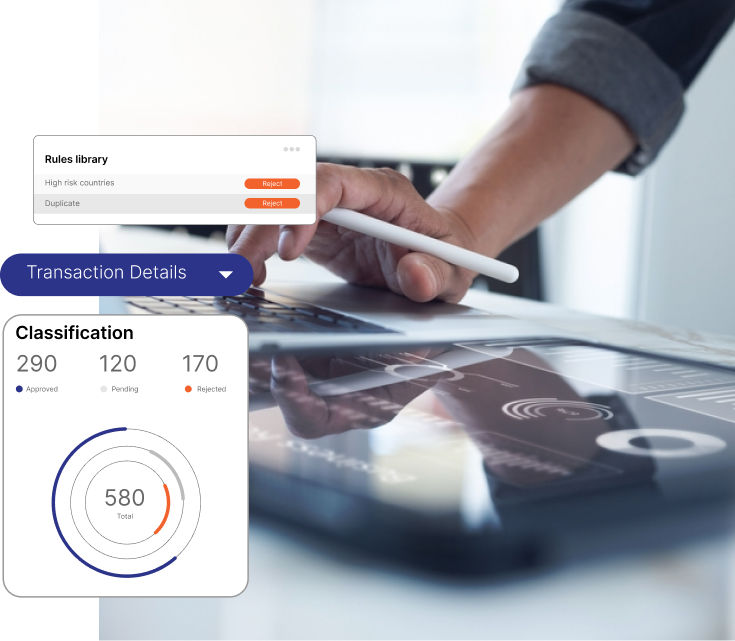
Advanced Transaction Monitoring Tool
Detect, prevent, and resolve suspicious activities in real-time with azakaw's AI-powered AML solution. Adopt a smarter and faster monitoring system that reduces false positives.
Related articles
AML Alert investigation video
This article provides general information and does not constitute legal, regulatory or compliance advice. Regulatory requirements and reporting deadlines described here reflect the information available at the time of writing and may change. The procedures are illustrative rather than mandatory, and the example is fictional. Check the applicable legislation, your supervisor's guidance and qualified legal or compliance professionals before acting on any point in this article.
Sources
Federal Decree-Law No. (10) of 2025 Regarding Anti-Money Laundering, and Combating the Financing of Terrorism and Proliferation Financing (UAE)
Cabinet Resolution No. (134) of 2025 Concerning the Executive Regulations of Federal Decree-Law No. (10) of 2025 (UAE)
Central Bank of the UAE – Guidance for Licensed Financial Institutions on Suspicious Transaction Reporting, June 2021
FATF – The FATF Recommendations (Recommendations 20 and 21)
Saudi Central Bank (SAMA) – Anti-Money Laundering and Counter-Terrorist Financing Guide
Kingdom of Saudi Arabia – Anti-Money Laundering Law (Royal Decree No. M/20) and its Implementing Regulations
FinCEN – Suspicious Activity Report filing requirements for banks (31 CFR 1020.320)
United Kingdom – Proceeds of Crime Act 2002


